Soccer Rondo Drills
A rondo is a keep-ball game in a small area: players on the outside keep the ball from defenders in the middle. Rondos are the most popular possession practice in soccer because they train passing, receiving, body shape and quick decisions all at once, with constant pressure.
The rondos below run from a simple 3v1 to a transition rondo where winning the ball means playing into the other half. Each is animated so you can see the angles and movements players should make.
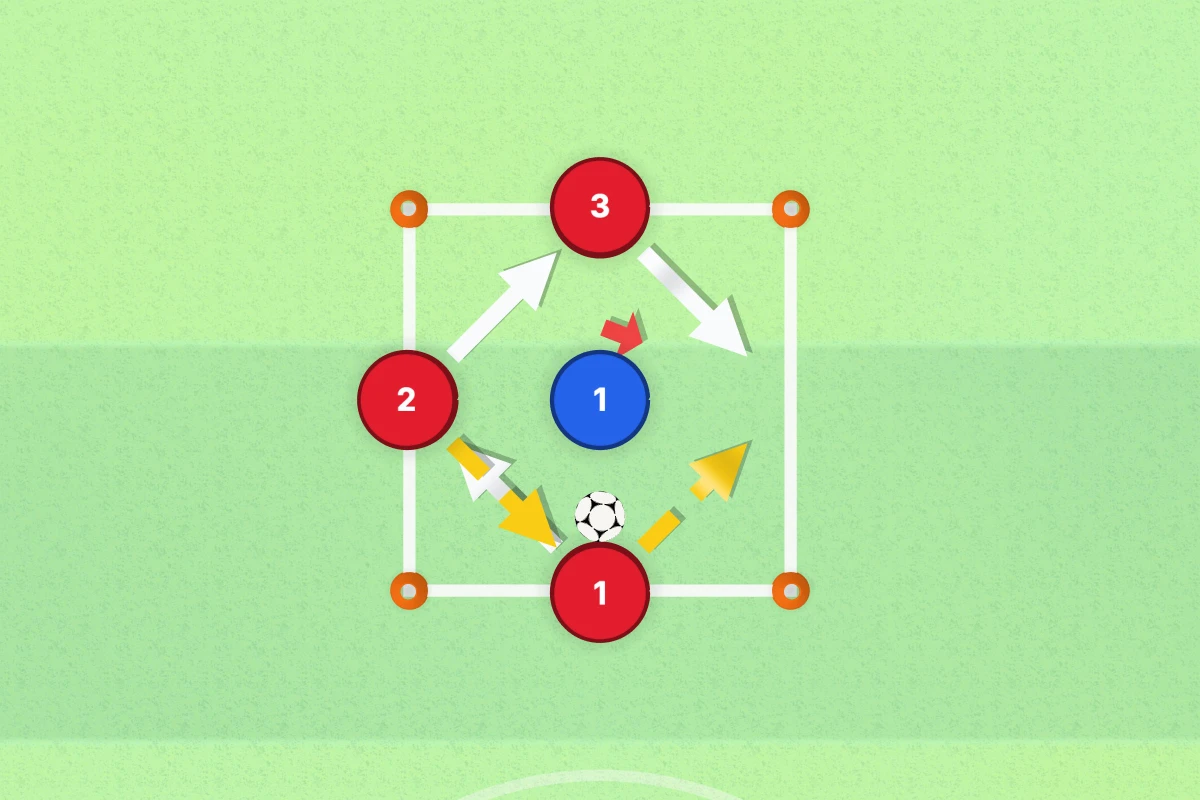
3v1 Rondo
Three keep the ball from one in a small box.
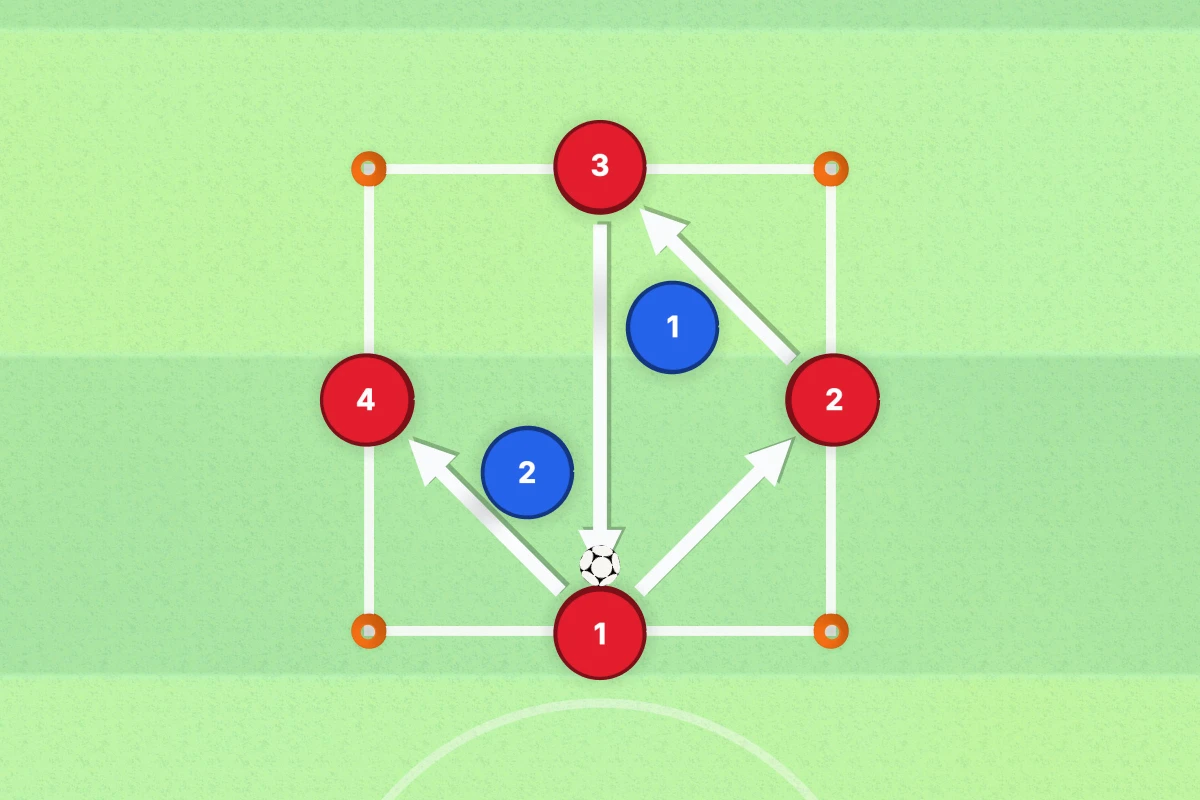
4v2 Rondo
Keep the ball round the outside against defenders in the middle.
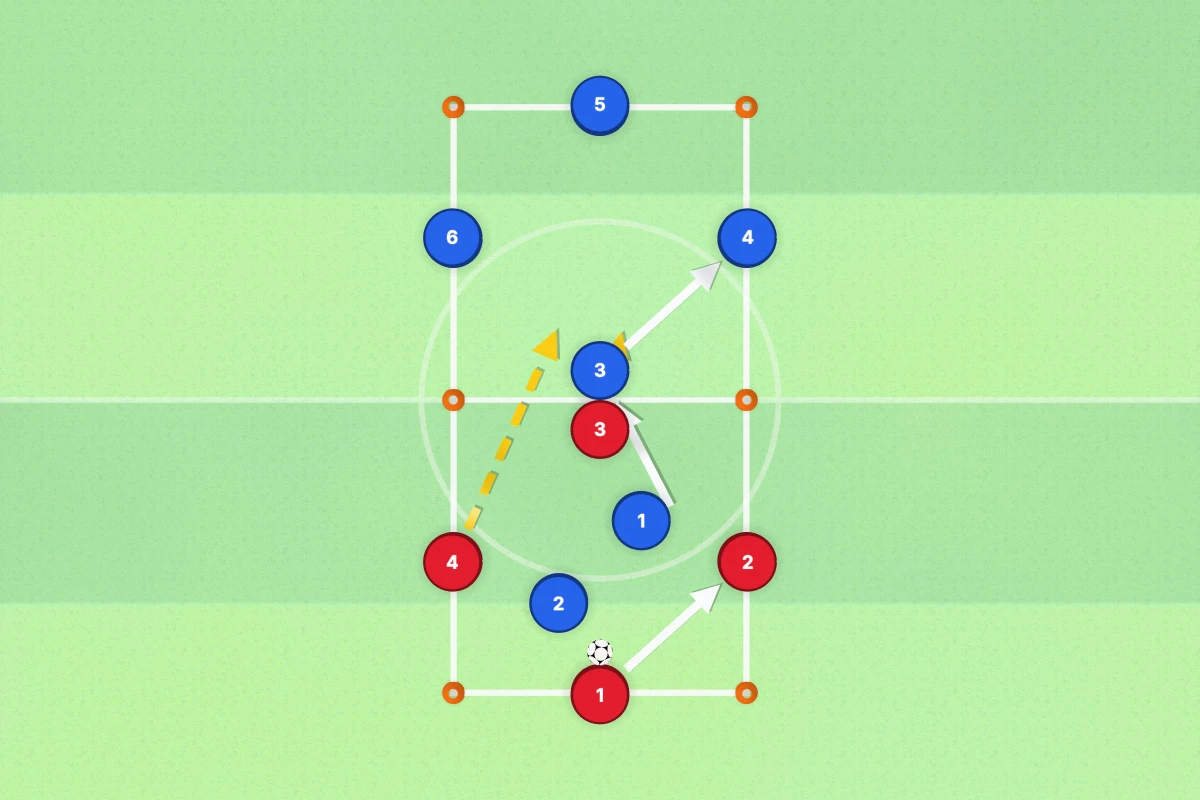
Transition Rondo
A rondo in one half; win it and play into the other half, where your team is waiting.
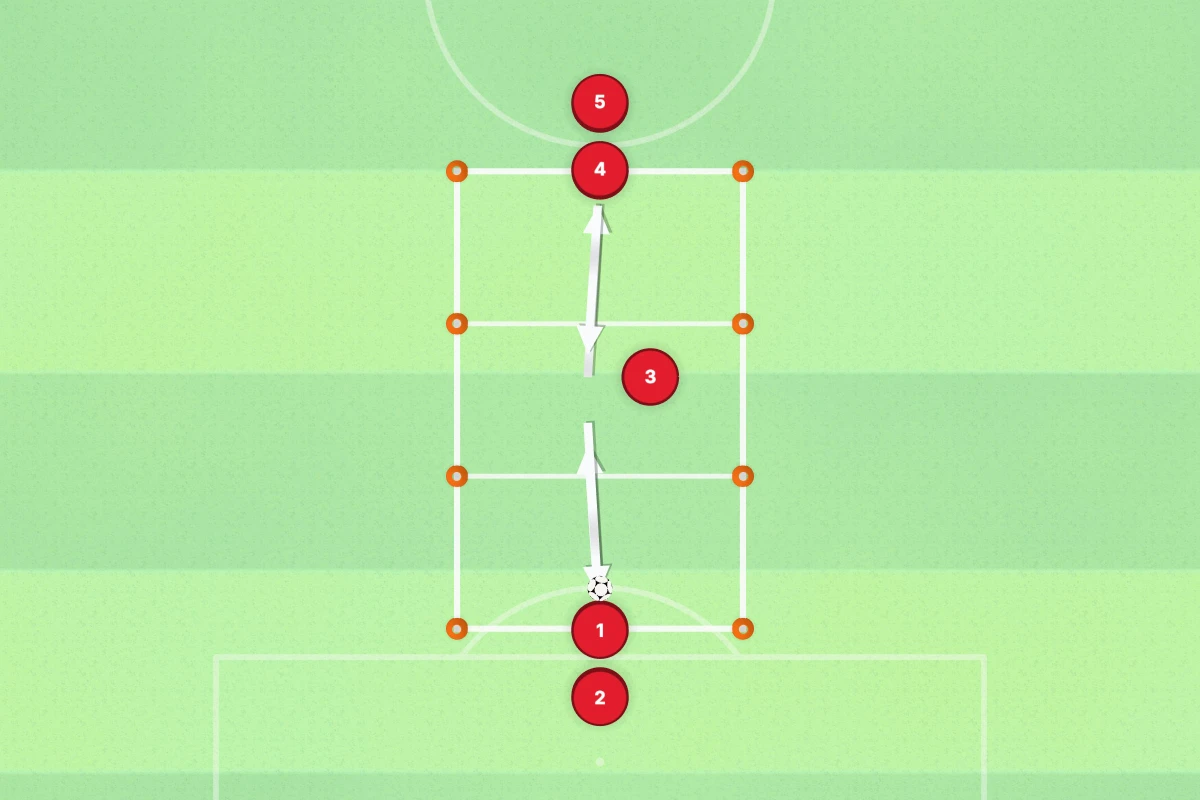
Receiving on the Half-Turn Drill
A middle player receives side-on and plays forward in one movement.
Coaching tips
- Size the grid to the players: smaller makes it harder, bigger makes it easier.
- Limit touches as the group improves: two-touch, then one-touch.
- Defenders who win the ball swap with the player who lost it, which keeps everyone working.
- Coach the angle of support: the player without the ball should always offer a passing line.
Turn these drills into a session
Add any drill to the free session planner with one click: it arrives with its diagram, setup and coaching points, ready to print as a PDF. To change the numbers or animate your own version, open it in DrawTactics.
Open the free session plannerFAQ
What size should a rondo grid be?
For a 4v2 rondo, start around 12 to 15 metres square. Shrink it as players improve to speed up their decisions, or make it bigger for younger players.
What age can players start doing rondos?
Simple rondos such as 4v1 or 3v1 work from around U8 or U9. Use a bigger area and allow more touches for younger players.