3v1 Rondo
The 3v1 rondo is where most players first learn to keep the ball under pressure. Three attackers on the sides of a small box keep it away from one defender, which means one side of the box is always empty, and the player who isn't involved has to move to fill it.
- AgesU8 to adult
- Players4 per box
- Space10 × 10 m
- Time12 min
- IntensityMedium
That movement is the whole point: it teaches support angles and the triangle shape every possession game depends on. The single defender also gets a lot of work at curving their run to cut off a pass. It's the right rondo for young players and for anyone new to rondos before you step up to 4v2.
Setup
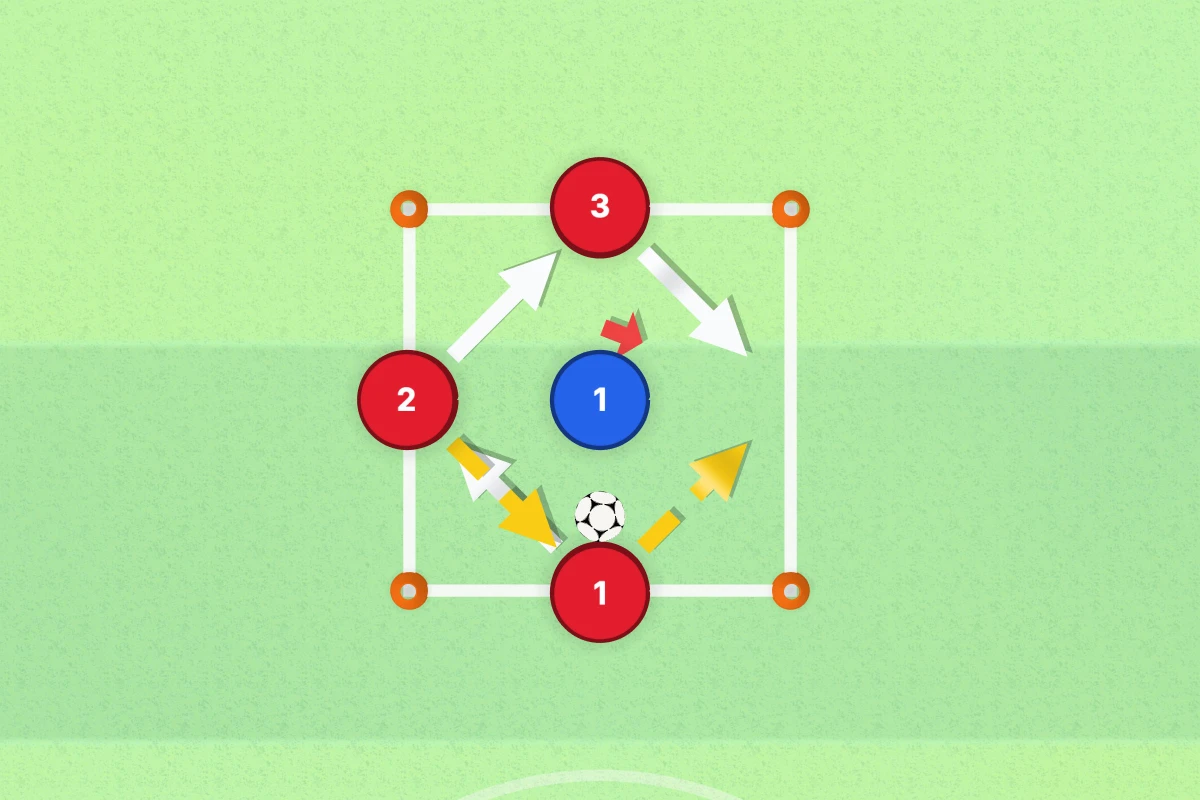
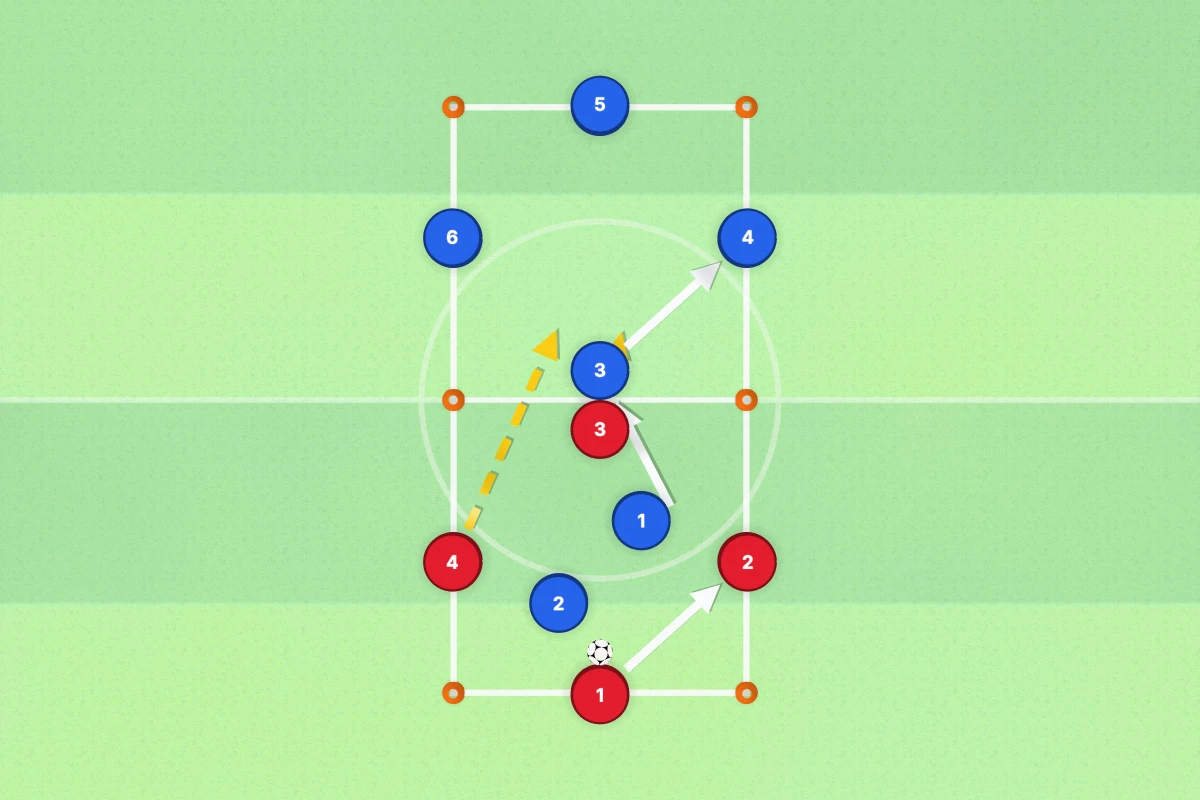
Mark out a 10 × 10 m box. Put 3 attackers on three of the four sides and 1 defender in the middle. The attackers pass round the box to keep the ball; whoever loses it, or plays it out of the box, swaps with the defender.
- Equipment4 cones per box, 1 ball per box, 1 bib per box
How it works
- The first attacker passes along the side of the box and the defender presses the receiver.
- The ball is moved on to the third attacker as the defender chases, and the first passer slides across to the empty side to make a triangle again.
- The third attacker passes to them on the open side, the defender turns to press again, and the second attacker moves across to fill the side just left empty.
Coaching points
- Two passing options at all times: the players off the ball move to make a triangle
- Receive across your body so you can play either way
- Pass to the side away from the defender
- Defender: curve your run to cut off one pass
- After you pass, look at which side is empty and get there
Make it harder
- Two-touch limit
- Count passes: 6 in a row is a point
- Smaller box, around 8 × 8 m
Make it easier
- Bigger box
- Defender at walking pace
- Attackers can use all four sides, with one side always left open
Adapting it by age
U8–U10
Use a 12 × 12 m box, unlimited touches and a walking defender, and count five passes as a point.
U12–U14
10 × 10 m, two touches, and the defender works for 60 seconds before swapping, whether they win it or not.
U15 to adult
8 × 8 m, one touch, and the defender scores by winning it and dribbling out of the box.
Common mistakes
All three attackers stand still on their cones, so the defender can cut out one pass and the other is in a straight line. Leave the fourth side open on purpose and tell the player not involved to always be on it.
The defender charges straight at the ball and gets played around every time. Show them how to arc the run so their body blocks one passing lane and forces the pass the other way.
Attackers receive with their back to one teammate and can only play one way. Ask for an open body: receive on the back foot, facing into the box, so both passes are on.
FAQ
How big should a 3v1 rondo be?
About 10 × 10 m for most groups. Make it bigger for young players or beginners, and smaller to speed up decisions for older teams.
What does a 3v1 rondo teach?
Support angles and triangles, receiving with an open body, and passing away from pressure. The defender learns to press with a curved run.
What age should players start rondos?
Players as young as U7 or U8 can play a 3v1 rondo in a bigger box with plenty of touches allowed.
Make this drill your own
Open the 3v1 rondo in DrawTactics to change the numbers and the size of the area, move the players, and export your own animation or diagram for your team. Or add it to a free session plan and print it.
Animate it in DrawTacticsRelated drills
4v2 Rondo
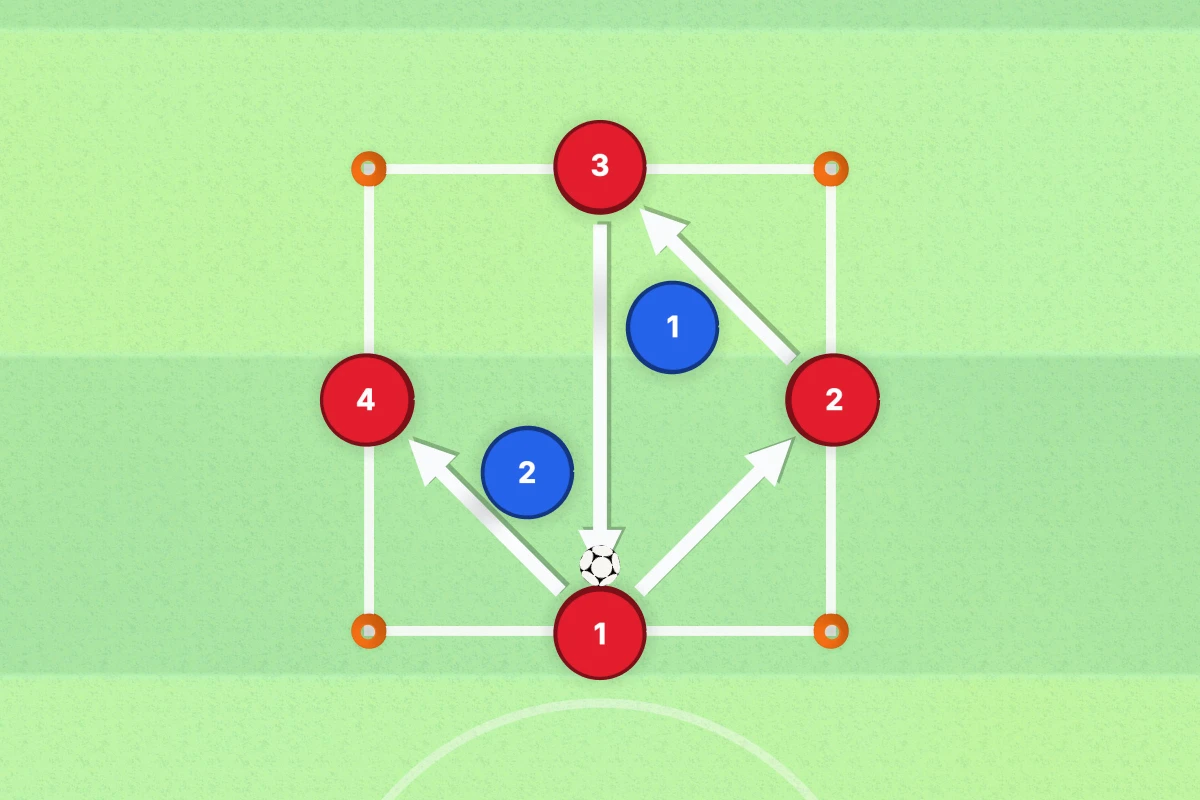
Keep the ball round the outside against defenders in the middle.
Pass and Move Drill
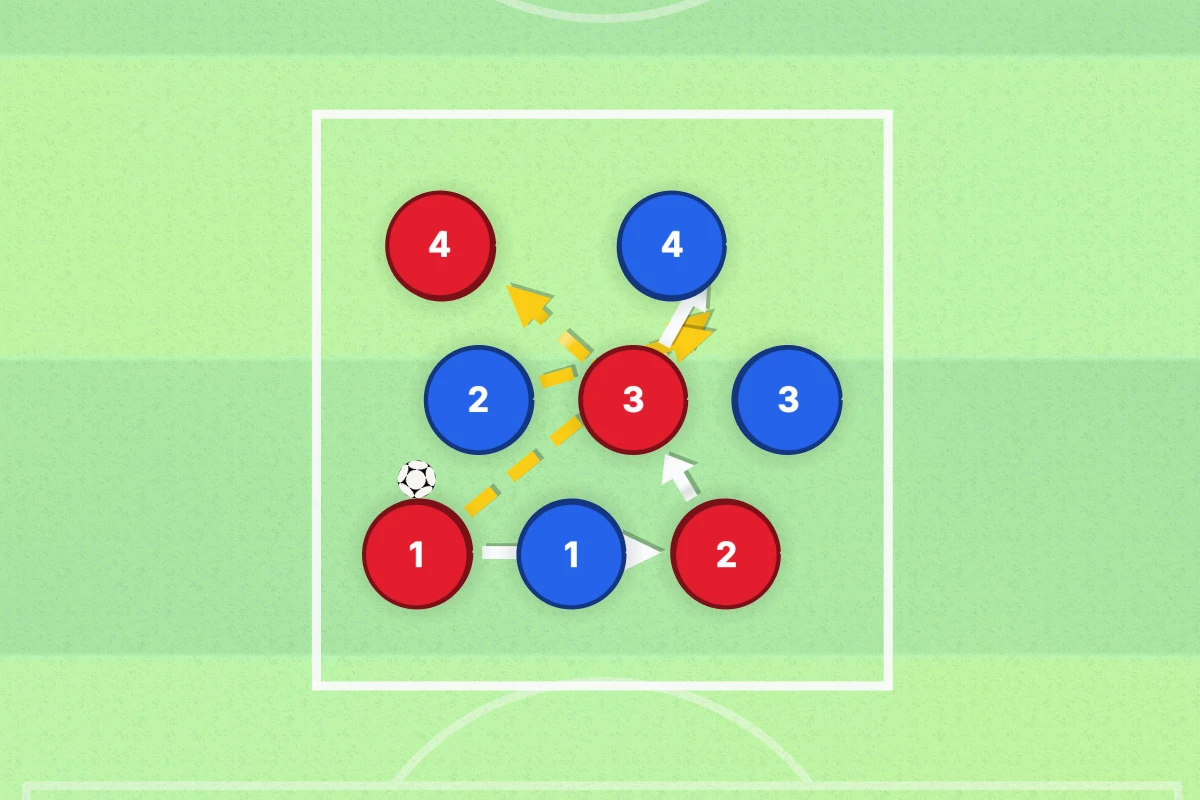
Two teams share the area, each passing among themselves and moving after every pass.
Receiving on the Half-Turn Drill
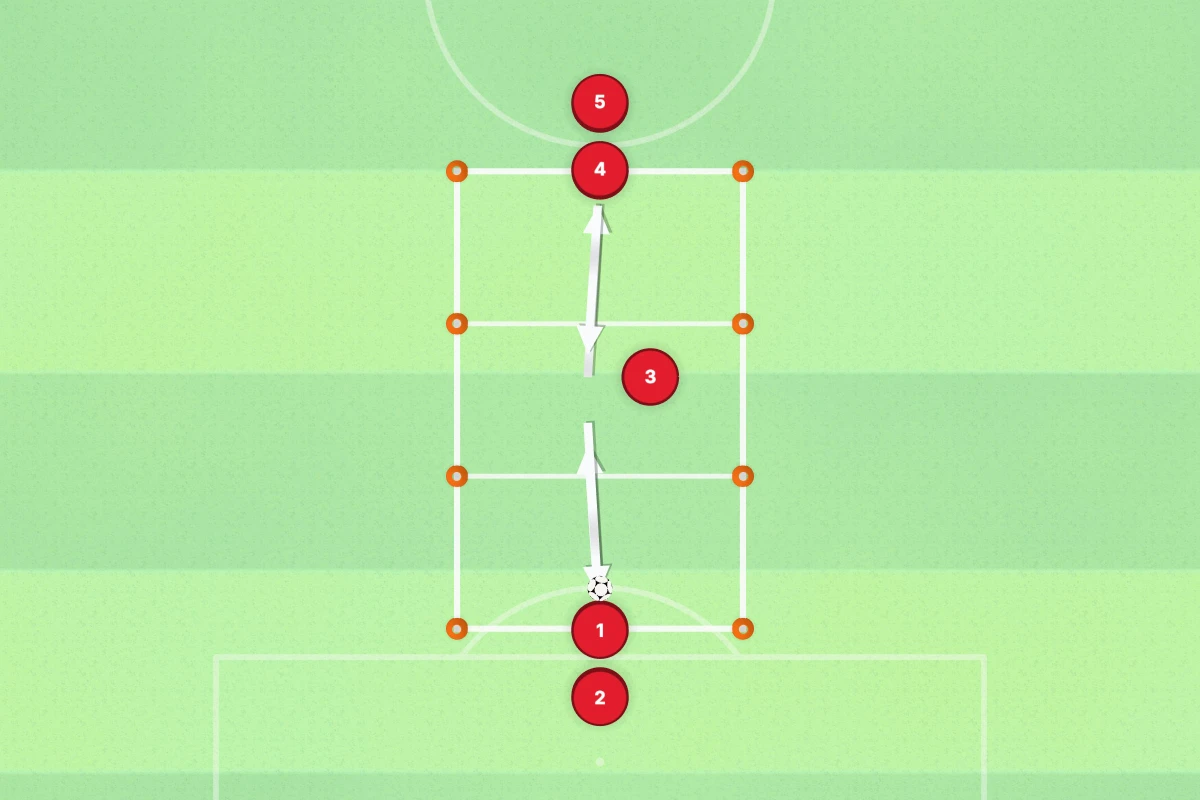
A middle player receives side-on and plays forward in one movement.
Transition Rondo
A rondo in one half; win it and play into the other half, where your team is waiting.
More in rondos drills, defending drills, or browse the full drill library.