Receiving on the Half-Turn Drill
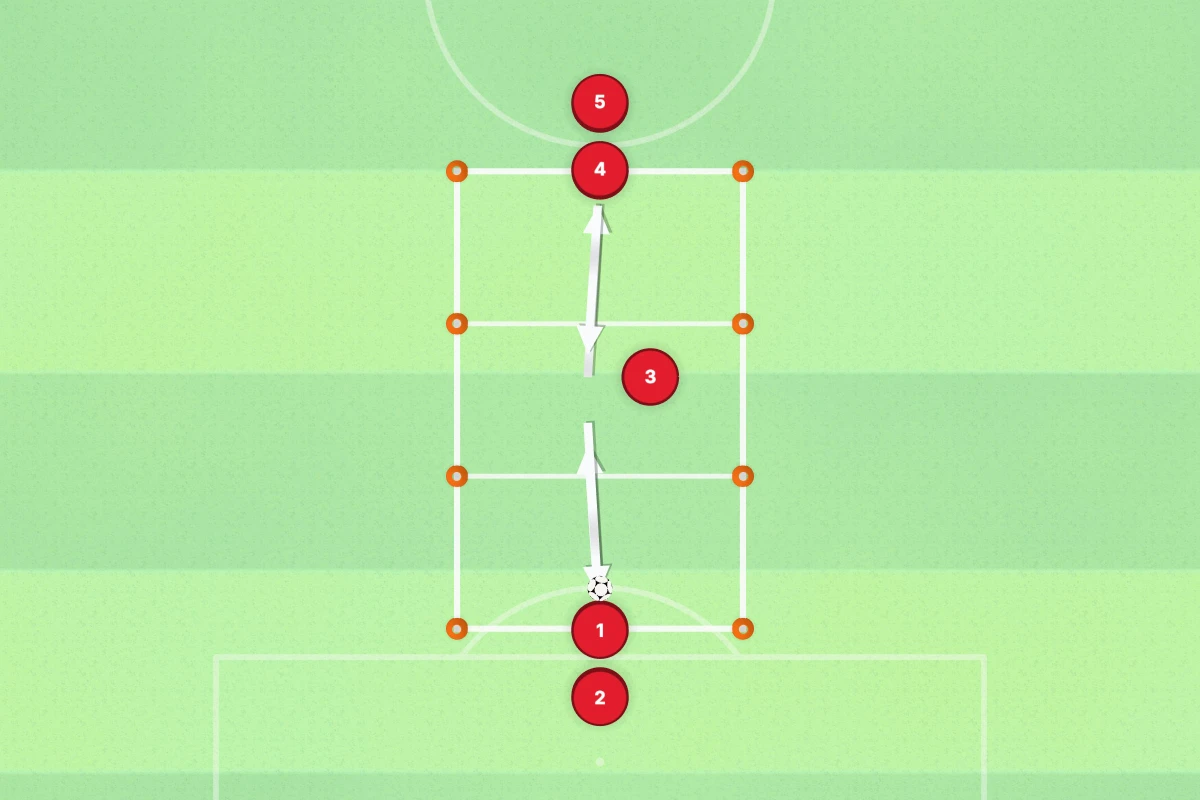
This drill isolates receiving on the half-turn: taking the ball side-on, with your hips open, so you can see both where it came from and where it's going. A middle player checks into a central zone, receives from one end and plays on to the other, then does it again the other way.
- AgesU8 to adult
- Players5 (3 to 7)
- Space24 × 15 m
- Time12 min
- IntensityMedium
It's the habit that lets midfielders play forward instead of back, and it's hard to coach in a game because it happens so fast. Repeating it in a simple channel, with a scan before every ball, makes it automatic. Swap the middle player every minute so everyone gets a turn.
Setup
Mark out a 24 × 15 m channel split into thirds. Put 2 players at each end and 1 in the middle third, with the ball at the bottom end. The middle player checks into the middle third, receives side-on from one end and plays on to the other. Swap the middle player every minute.
- Equipment8 cones to mark the thirds, 2 balls
How it works
- The middle player checks into the center of the middle third and the bottom end plays the ball into them.
- They receive side-on, play it on to the top end and drift back out to make space.
- They check in again from the other side and the top end passes back into them.
- On the half-turn again, they play it on down to the bottom end to finish the cycle.
Coaching points
- Look over your shoulder before the ball arrives
- Side-on, hips open, so you can see both ends
- First touch across your body and forward
- Receive on your back foot
- Check away first, then into the space, to create room to receive
Make it harder
- A passive defender follows the middle player
- Middle player one-touch
- The end player holds up a color or a number of fingers, and the middle player calls it before receiving
- Add a second middle player so the two work off each other
Make it easier
- Take two touches: control, then pass
- Shorter channel
- Play the ball in by hand to the middle player's back foot
Adapting it by age
U8–U10
Use an 18 m channel, two touches, and teach it as 'stand like a door half open' so players get the side-on idea before speed comes into it.
U12–U14
24 × 15 m, the scan-and-call progression with a shown number, and a passive defender for the last few minutes.
U15 to adult
Lengthen to 30 m, one touch through the middle, and make the defender active so the middle player has to use the check away to lose them.
Common mistakes
The middle player receives facing the passer and has to turn with the ball. Place a cone at their side and ask them to receive with that shoulder pointing to it, so their hips face the far end.
They look over the shoulder after the ball arrives, not before. Use the shown-number progression; if they can't call it before the ball reaches them, they scanned too late.
The first touch stops the ball dead under their feet. Ask for the first touch to travel a yard forward, across the body, so the next touch is a pass.
FAQ
What does receiving on the half-turn mean?
Taking the ball side-on, with the body half open to the field, so you can play forward without having to turn fully with the ball.
Which foot should you receive with on the half-turn?
Usually the back foot, the one further from the passer. It lets the ball travel across your body and keeps it away from anyone behind you.
Make this drill your own
Open the receiving on the half-turn drill in DrawTactics to change the numbers and the size of the area, move the players, and export your own animation or diagram for your team. Or add it to a free session plan and print it.
Animate it in DrawTacticsRelated drills
4v2 Rondo
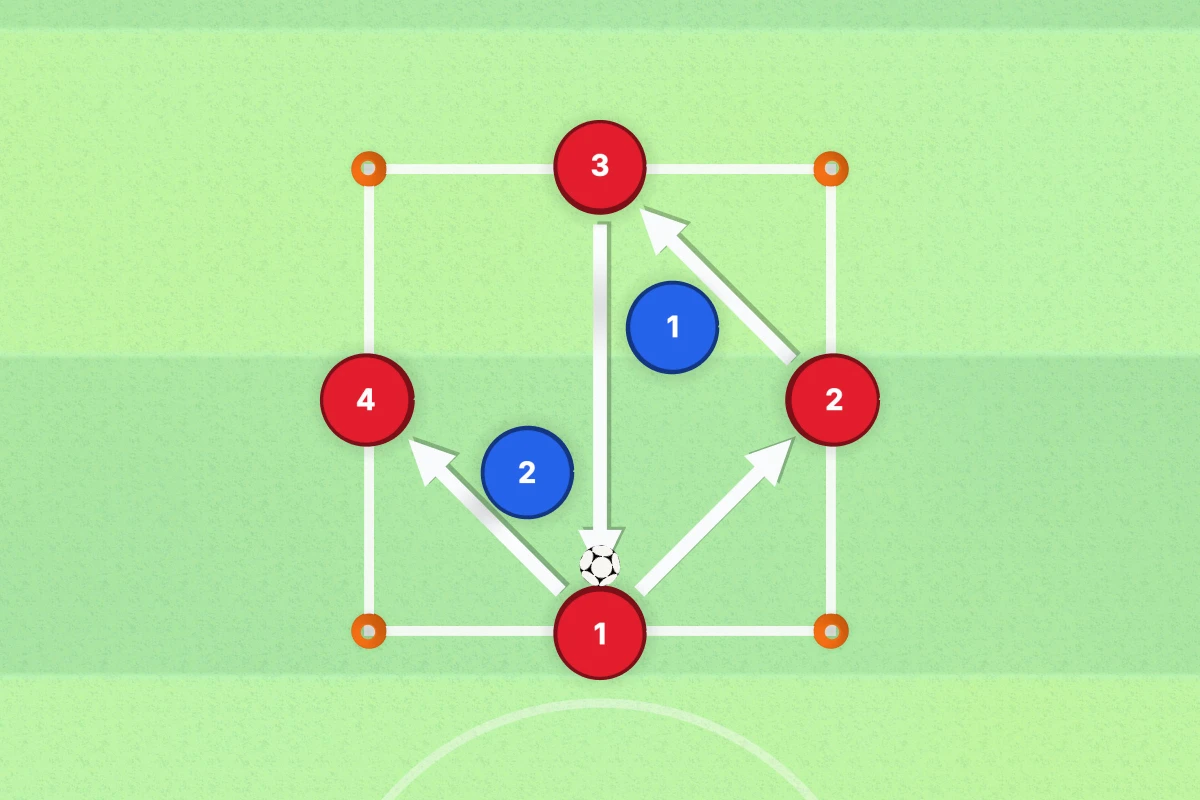
Keep the ball round the outside against defenders in the middle.
Y Passing Drill
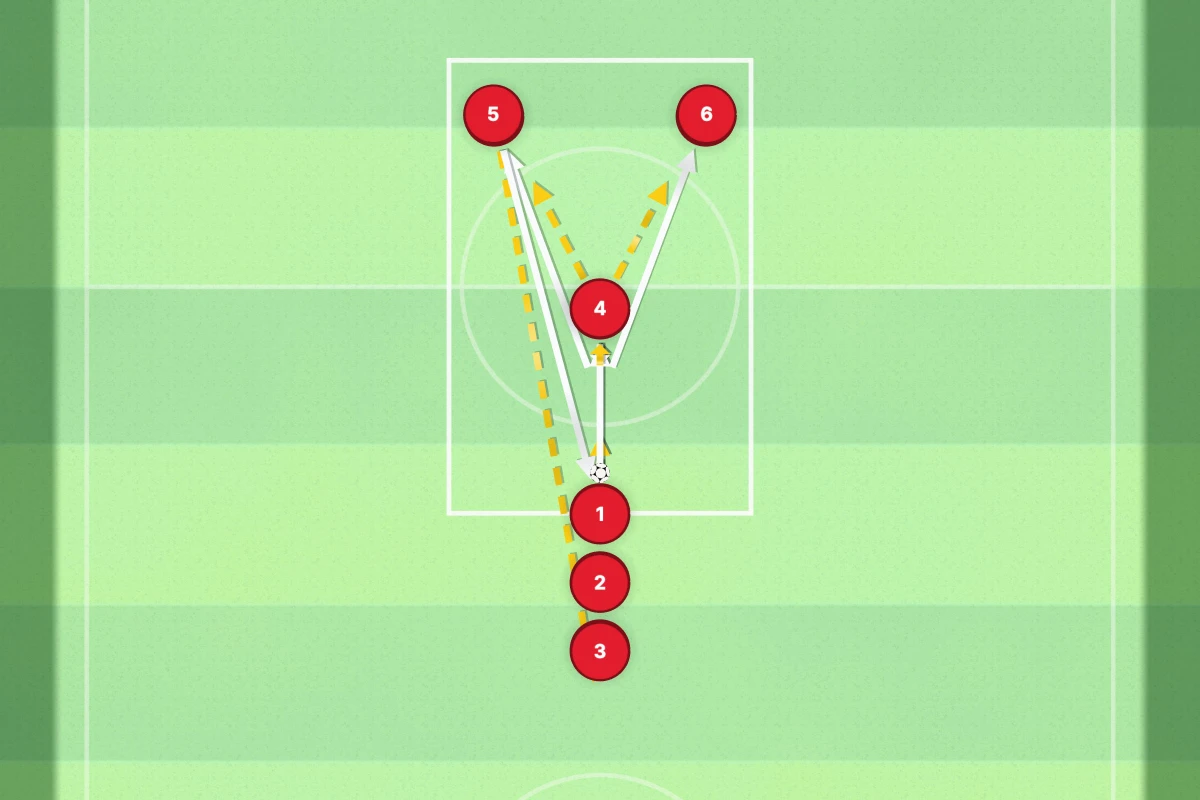
Pass in, lay-off, pass wide, alternating sides, then everyone moves on one spot.
Possession Drill with Neutrals (4v4+3)
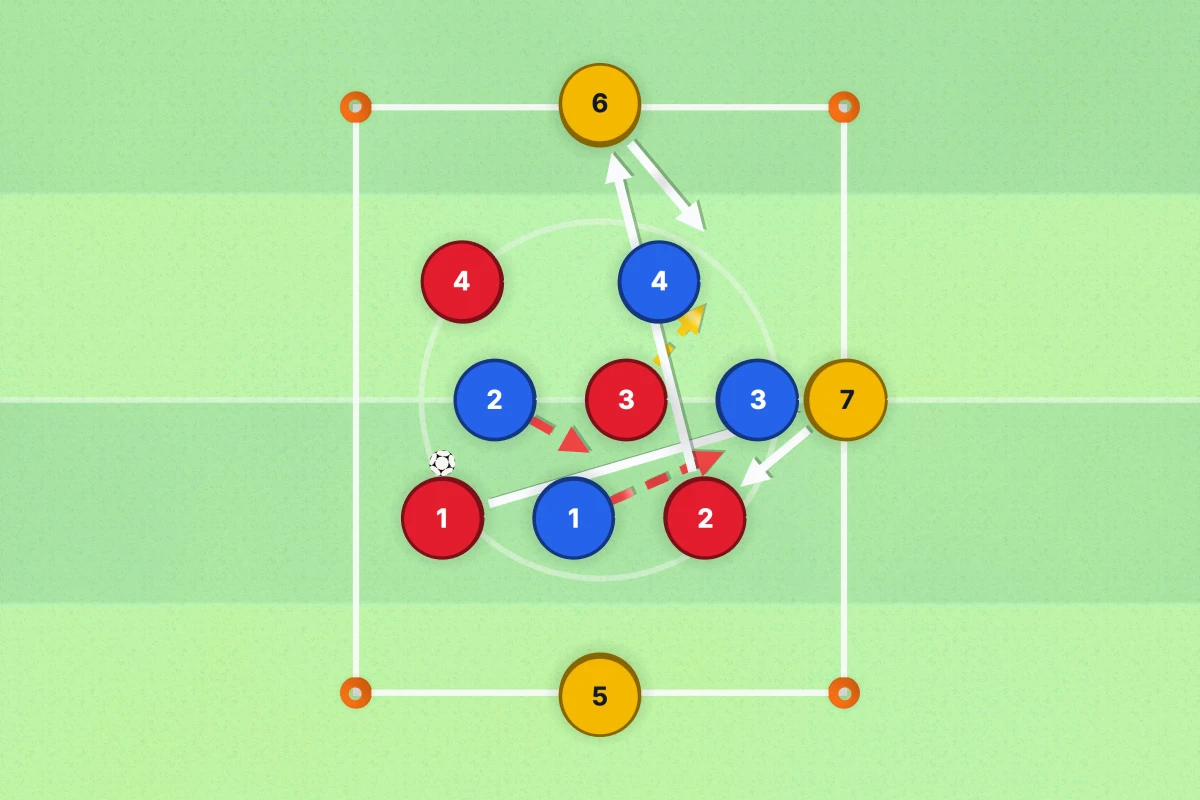
Keep the ball with the help of neutrals who play for whoever has it.
Playing Through the Thirds Soccer Drill
Build from one end to the other, zone by zone, with an overload in each third.
More in passing drills, rondos drills, or browse the full drill library.