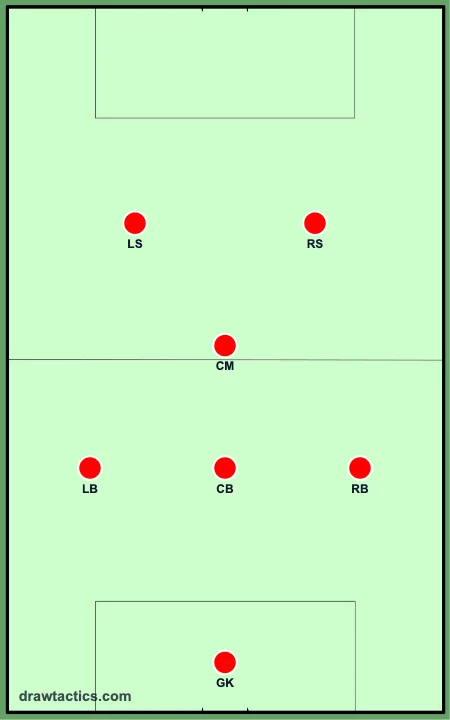
The most common 7-a-side formations are 2-3-1, 3-2-1, 2-1-2-1 and 3-1-2. If you are not sure where to start, use the 2-3-1: two centre-backs, three midfielders and a striker. Build your team sheet below, or read how each shape works.
Done. Want to show your players how the shape moves? Animate it in DrawTactics.
Upgrade now.
Who plays 7-a-side?
From the 2026-27 season, the FA's FutureFit changes make 7v7 the format for under-10s and under-11s (it used to be under-9s and under-10s). Adult 7-a-side leagues use the same shapes.
The 4 most common 7-a-side formations
Formations are written from the back, not counting the goalkeeper: a 2-3-1 has two defenders, three midfielders and one forward. Treat the shape as a starting point; young players should still try different positions.
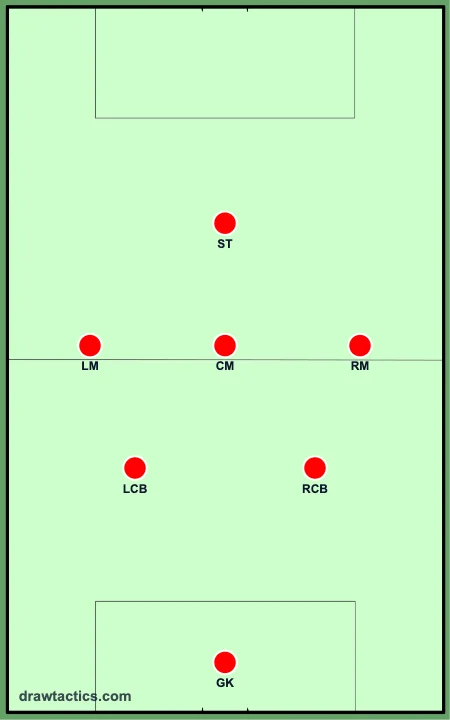
2-3-1
Two centre-backs, three midfielders and a striker. The most common 7v7 shape, because it is balanced and full of passing triangles.
Strengths
Width from the two wide midfielders
Triangles all over the pitch
Leads naturally into 3-2-3 at 9v9 and 4-3-3 at 11v11
Weaknesses
Two defenders can be outnumbered if the wide players do not track back
Lots of running for the wide midfielders
Best for: Most teams. Start here if you are not sure.
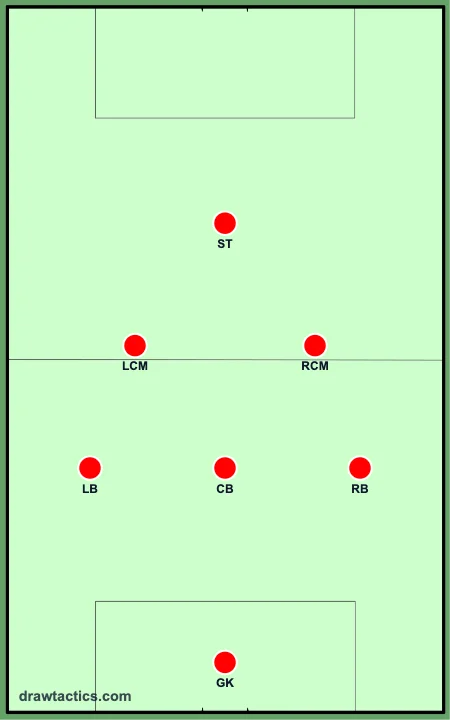
3-2-1 (the Christmas tree)
Three defenders, two centre midfielders and a striker. Solid at the back, with the wide defenders free to push on.
Strengths
Hard to counter-attack against
Two midfielders share the work in the middle
Wide defenders learn to attack as well as defend
Weaknesses
Less width higher up unless the wide defenders join in
The striker can be isolated
Best for: Teams that concede on the break or face quick forwards.
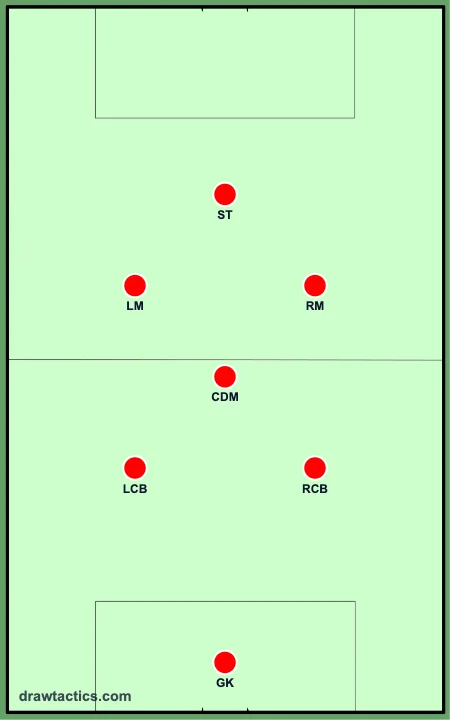
2-1-2-1 (the midfield diamond)
Two defenders, a holding midfielder, two attacking wide players and a striker. The holder protects the back two while four players attack.
Strengths
A clear holding role teaches positional discipline
Lots of attacking options
Good for keeping the ball
Weaknesses
The sides are exposed when the wide players are high
Relies on a disciplined holding midfielder
Best for: Possession teams with a calm player for the holding role.
3-1-2
Three defenders, one midfielder and two strikers. A solid base with a strike pair to press and combine.
Strengths
Two strikers press the defenders and play off each other
Three at the back give cover
Weaknesses
One midfielder can be outnumbered
Gaps between defence and attack if the team stretches
Best for: Teams that want to press high or play forward quickly.
Goalkeeper: Starts attacks from the back and organises the defenders.
Defenders: Two or three players who protect the goal and learn to play out from the back.
Midfielders: The engine of a 7v7 team: they support the striker and get back to help the defence.
Striker: Leads the press, holds the ball up and finishes chances.
Coaching tips for 7-a-side
Keep it simple. One or two instructions per position are plenty. The shape matters less than players knowing where to find space.
Rotate positions. At youth level, give everyone time in defence, midfield and attack. It builds better players and keeps them interested.
Training the shape in small-sided games. Set up games with the same numbers and shape you play on matchday, then add one coaching point at a time. Plan it in the free session planner.
Share the plan before the match. Send players and parents the team sheet from the builder above so everyone knows their position. When your team moves up, see the 9-a-side formations.
Show Your Players How the Shape Moves
A team sheet shows where players start. To show how the shape moves when you win or lose the ball, use the DrawTactics tactics board and animation tools: drag players, draw runs and passing lanes, and export a short video for your team.
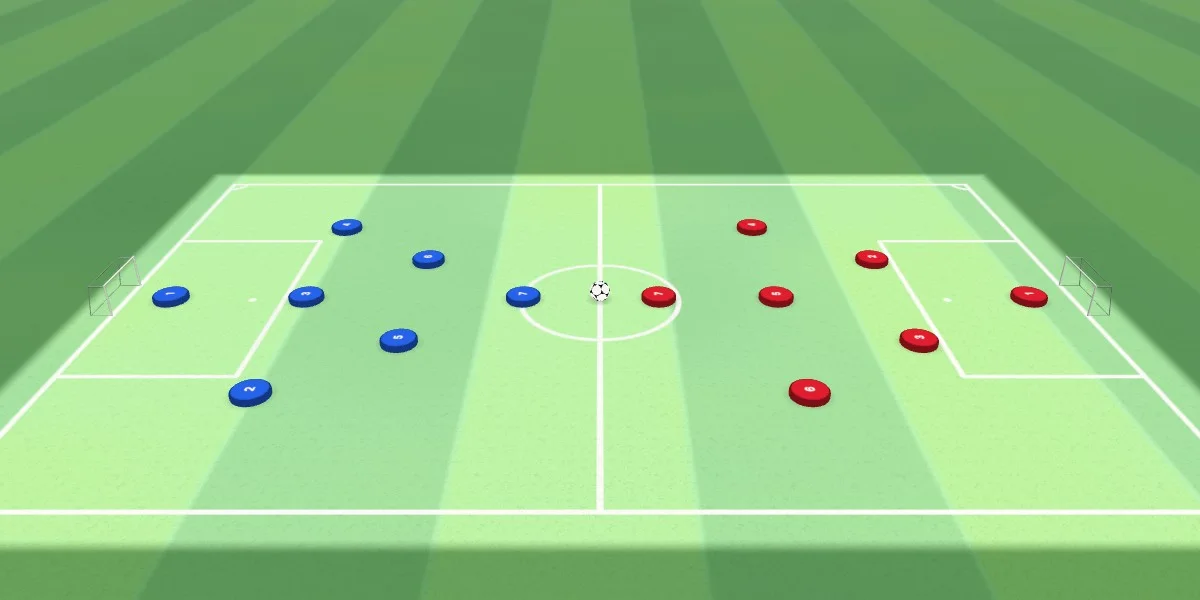
Animate it on a 7-a-side pitchThe Broadcast Animator has 9, 7 and 5-a-side pitches, sized like the FA's youth pitches, with goals and markings to match. Line up your formation, move the players step by step and export a video.Open a 7-a-side pitch
There is no single best shape, but the 2-3-1 suits most 7-a-side teams because it is balanced and easy to learn. Pick a more defensive or attacking shape once your players are comfortable.
What age groups play 7-a-side?
From the 2026-27 season, the FA's FutureFit changes make 7v7 the format for under-10s and under-11s (it used to be under-9s and under-10s). Adult 7-a-side leagues use the same shapes.
How many players are on the pitch in 7-a-side?
7 per team: 6 outfield players and a goalkeeper. Squad sizes and substitution rules depend on your league.
Can I make a 7-a-side team sheet for free?
Yes. Use the builder on this page: pick a formation, type in the names and numbers, then download a PNG or print it (or save it as a PDF). It is free, with no sign-up.
How should I train my team's formation?
Use small-sided games in training with the same shape, rotate players through different positions, and keep the instructions for each role simple. Plan the session in the free session planner.