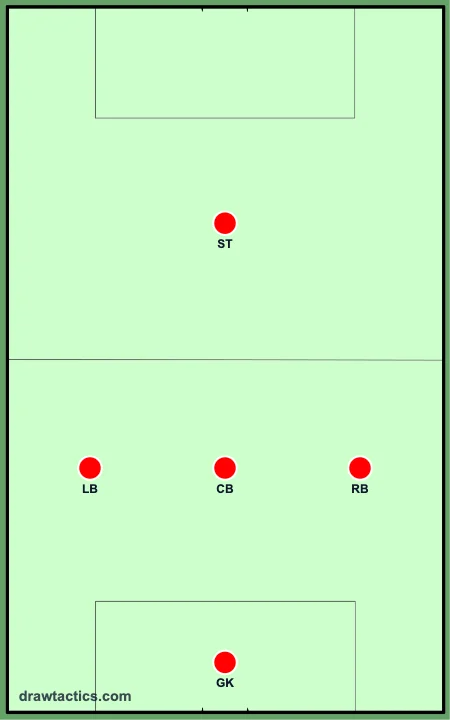
The most common 5v5 formations are 1-2-1, 2-2, 2-1-1 and 3-1. If you are not sure where to start, use the 1-2-1: one defender, two wide players and one striker. Build your lineup below, or read how each shape works.
Done. Want to show your players how the shape moves? Animate it in DrawTactics.
Upgrade now.
Who plays 5v5?
US Soccer's small-sided standards use 4v4 for U8 and younger and 7v7 at U9 and U10, so 5v5 is mostly chosen by leagues, rec programs and indoor soccer. It is also the team size in futsal: four field players and a goalkeeper.
The 4 most common 5v5 formations
Formations are written from the back, not counting the goalkeeper: a 1-2-1 has one defender, two midfielders and one forward. Treat the shape as a starting point; young players should still try different positions.
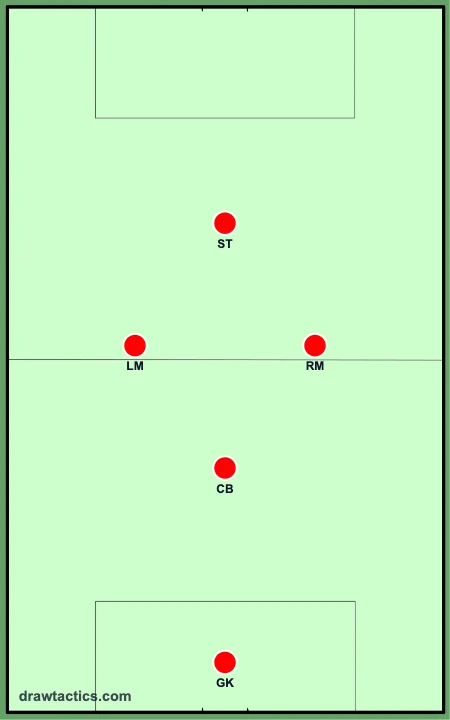
1-2-1 (the diamond)
One defender, two wide players and one striker. The diamond gives every player a passing angle, so it is the shape most coaches start with.
Strengths
Natural triangles and diamonds for passing
Width from the two wide players
Every player has a clear job in attack and in defense
Weaknesses
The single defender can be exposed on the counter
The wide players have a lot of running to do
Best for: Teams learning to pass and move. A good default for most 5v5 teams.
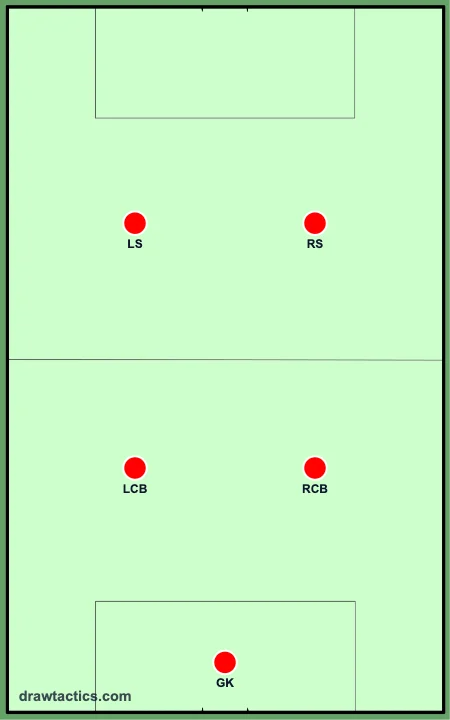
2-2 (the box)
Two defenders and two forwards in a square. Simple roles and pairs that look after each other.
Strengths
Easy for new players to understand
Two defenders cover each other
Two forwards can press and combine
Weaknesses
The team can split into two pairs with a gap in the middle
Fewer diagonal passes than the diamond
Best for: Beginners, and teams conceding too many goals.
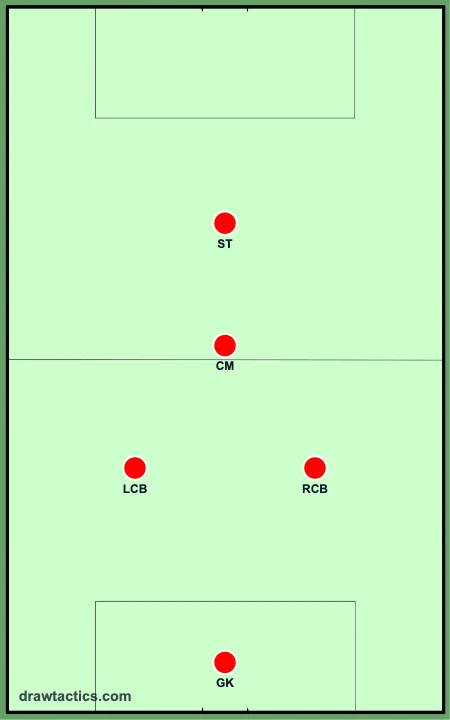
2-1-1
Two defenders, a center midfielder and a striker. Safe at the back, with one player linking defense and attack.
Strengths
Cover at the back when the midfielder joins the attack
One player controls the middle of the field
Weaknesses
The striker can be isolated
Needs a busy, fit midfielder
Best for: Teams that want security without giving up the middle.
3-1
Three across the back and one striker. Very hard to break down, with the wide defenders stepping forward when you have the ball.
Strengths
Hard to play through
Wide defenders can push on and become midfielders
Weaknesses
Few players in attack
The striker is often on their own
Best for: Protecting a lead or facing a stronger team.
Goalkeeper: Organizes the players in front and starts attacks with throws and short passes.
Defenders: Stop the ball getting through the middle, then step in with the ball when there is space.
Midfielders and wide players: Link everything. In 5v5 they defend and attack in almost every move.
Striker: Gives the team a target, holds the ball up and presses the opposition's defenders.
Coaching tips for 5v5
Keep it simple. One or two instructions per position are plenty. The shape matters less than players knowing where to find space.
Rotate positions. At youth level, give everyone time in defense, midfield and attack. It builds better players and keeps them interested.
Practice the shape in small-sided games. Set up games with the same numbers and shape you play on game day, then add one coaching point at a time. Plan it in the free session planner.
Share the plan before the game. Send players and parents the lineup from the builder above so everyone knows their position. When your team moves up, see the 7v7 formations.
Show Your Players How the Shape Moves
A lineup shows where players start. To show how the shape moves when you win or lose the ball, use the DrawTactics tactics board and animation tools: drag players, draw runs and passing lanes, and export a short video for your team.
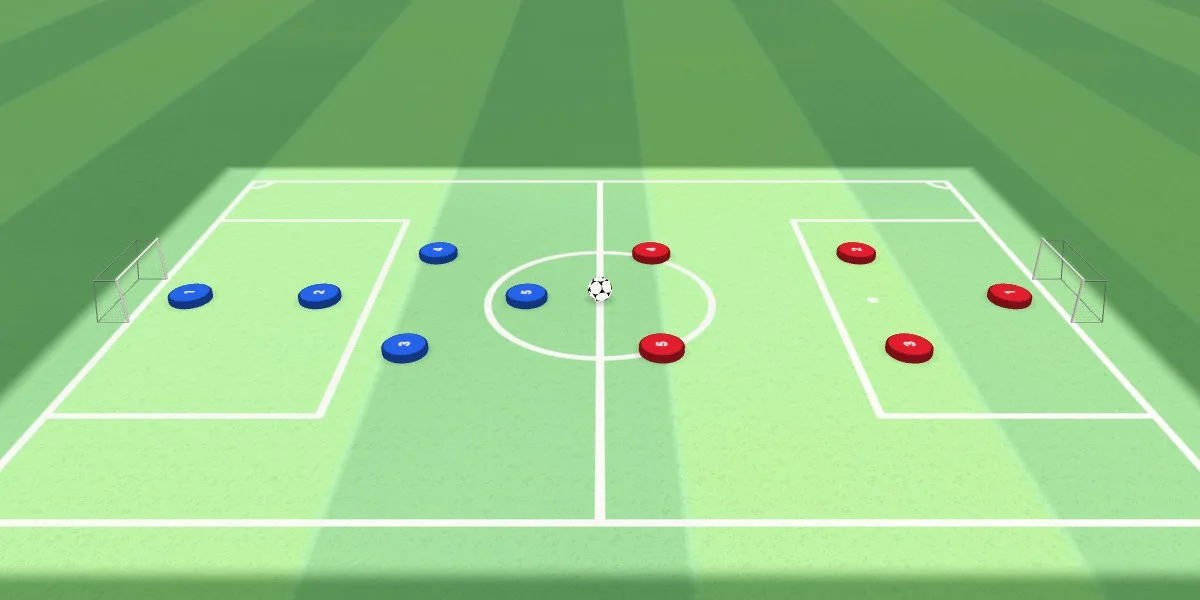
Animate it on a 5v5 fieldThe Broadcast Animator has 9v9, 7v7 and 5v5 fields with goals and markings to scale. Line up your formation, move the players step by step and export a video.Open a 5v5 field
There is no single best shape, but the 1-2-1 suits most 5v5 teams because it is balanced and easy to learn. Pick a more defensive or attacking shape once your players are comfortable.
What age groups play 5v5?
US Soccer's small-sided standards use 4v4 for U8 and younger and 7v7 at U9 and U10, so 5v5 is mostly chosen by leagues, rec programs and indoor soccer. It is also the team size in futsal: four field players and a goalkeeper.
How many players are on the field in 5v5?
5 per team: 4 field players and a goalkeeper. Squad sizes and substitution rules depend on your league.
Can I make a 5v5 lineup for free?
Yes. Use the builder on this page: pick a formation, type in the names and numbers, then download a PNG or print it (or save it as a PDF). It is free, with no sign-up.
How should I practice my team's formation?
Use small-sided games in practice with the same shape, rotate players through different positions, and keep the instructions for each role simple. Plan the session in the free session planner.