Passing Square Drill
The passing square drill is the simplest pass-and-follow pattern there is: four cones, a small queue at each, and the ball travels round the square while players chase their own pass to the next corner. Most coaches in youth and amateur football have run some version of it, and it earns its place because it gets a lot of touches into ten minutes.
- AgesU8 to adult
- Players8 to 12
- Space15 × 15 m
- Time10 min
- IntensityLow
It develops receiving on the back foot, passing to the correct foot and talking to the next player. Use it as the first block of a session that has passing or possession as its theme, or any night you need a calm, organized start before the work gets harder.
Setup
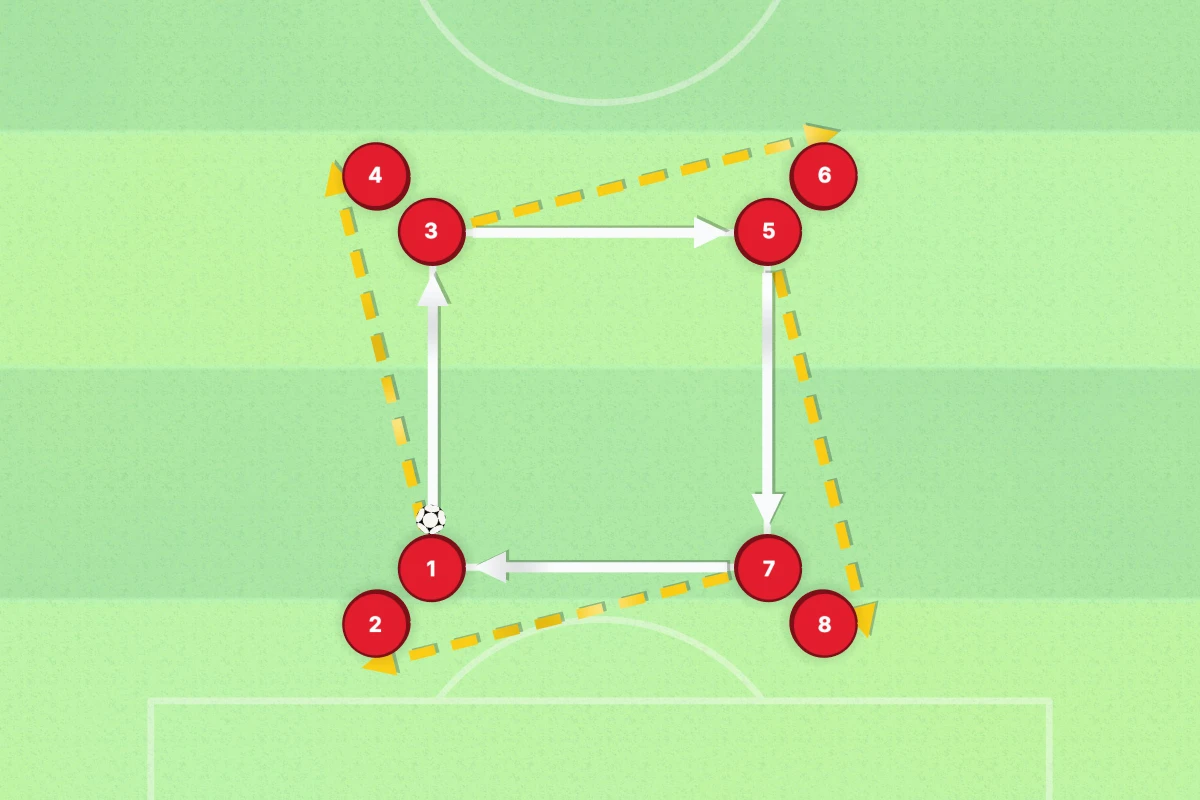
Mark out a 15 × 15 m square with a cone on each corner. Put 8 players in four queues of 2, one queue behind each cone, and give the first player at one corner the ball. Each player passes to the front of the next queue round the square and then runs to join the back of that queue.
- Equipment4 cones or discs, 1 ball per square (2 for the progression)
How it works
- The first player at corner one passes along the side of the square to corner two and follows the pass to the back of that queue.
- Corner two plays on to corner three and follows, while the next player at corner one steps up to the cone.
- Corner three passes to corner four and follows, and corner two's next player steps up to take their place.
- Corner four plays back to the new player at corner one, which completes the lap, and the pattern starts again.
Coaching points
- Open up side-on before the ball arrives so you receive across your body on your back foot
- Pass to the receiver's far foot so they can move it on with their next touch
- Call for it early so the passer never has to look for you
- Follow your pass at pace, not at a stroll
- Weight the pass so it reaches the cone, not the queue behind it
Make it harder
- Start a second ball from the opposite corner so both balls chase each other round
- One touch only
- Pass, get it straight back with a wall pass, then play on to the next corner
- Change direction on the coach's call
Make it easier
- Allow two or three touches
- Make the square smaller so passes are shorter
- Pass and stay for the first few laps, then add the follow
Adapting it by age
U8–U10
Use a 10 × 10 m square, three touches, and one ball. Count laps as a group and try to beat the score without the ball leaving the square.
U12–U14
Stay at 15 × 15 m with a two-touch limit and add the second ball once the first lap runs cleanly. Ask receivers which foot they want it on.
U15 to adult
Go to 18–20 m sides, one touch, two balls, and add the wall-pass variation so every receiver has to set and spin quickly.
Common mistakes
Players receive square-on, facing the passer, and need an extra touch to turn. Put a cone a step inside each corner and ask receivers to stand with one shoulder pointing at it, so their hips already face the next corner.
Passers watch their ball and jog, so queues pile up at one corner. Make the follow part of the rule: if you don't arrive at the next queue before the ball leaves it, the group restarts the count.
Passes go to the receiver's near foot, so the ball has to be stopped and moved again. Ask every receiver to point at the foot they want it on before it's played, and praise passes that land there.
FAQ
How many players do you need for a passing square drill?
Eight is ideal, two at each corner. Three per corner works too, but more than that and players stand around between turns, so set up a second square instead.
How big should the passing square be?
About 15 m a side for most teams. Go down to 10 m for young players or when you want one-touch speed, and up to 20 m to practice longer, firmer passes.
Make this drill your own
Open the passing square drill in DrawTactics to change the numbers and the size of the area, move the players, and export your own animation or diagram for your team. Or add it to a free session plan and print it.
Animate it in DrawTacticsRelated drills
Y Passing Drill
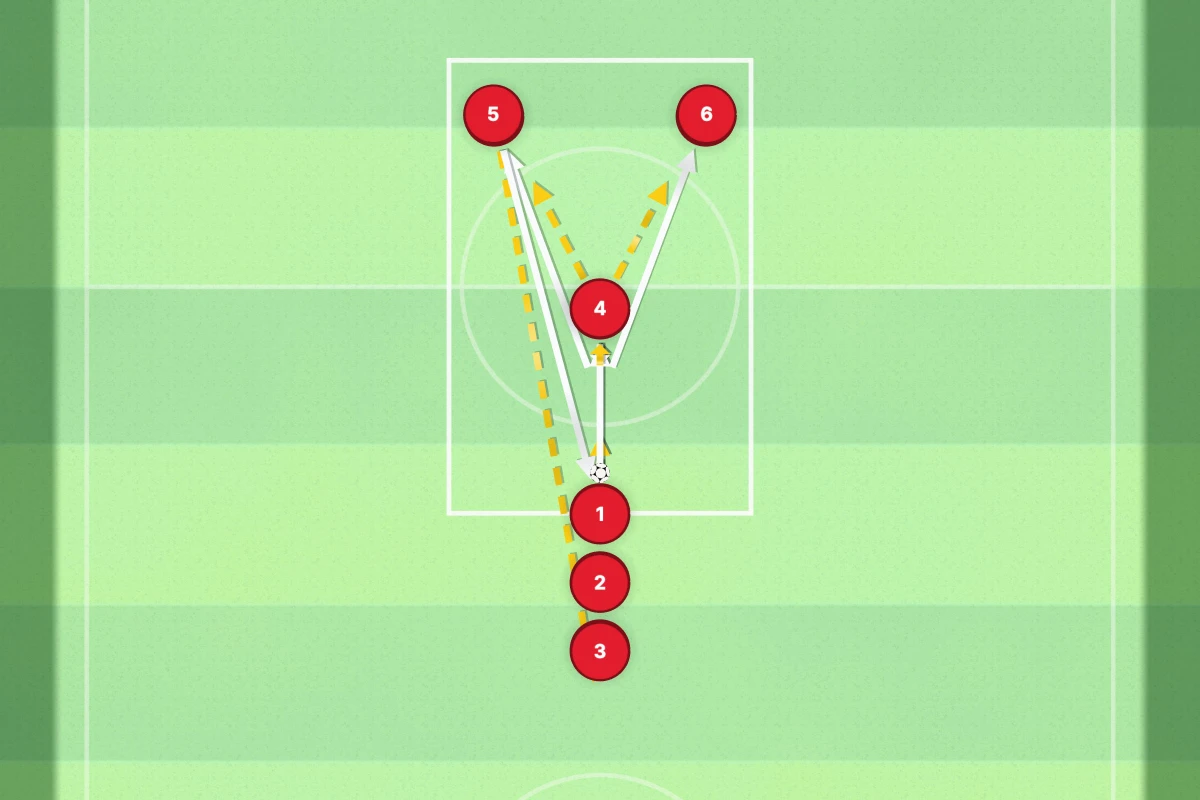
Pass in, lay-off, pass wide, alternating sides, then everyone moves on one spot.
Pass and Move Drill
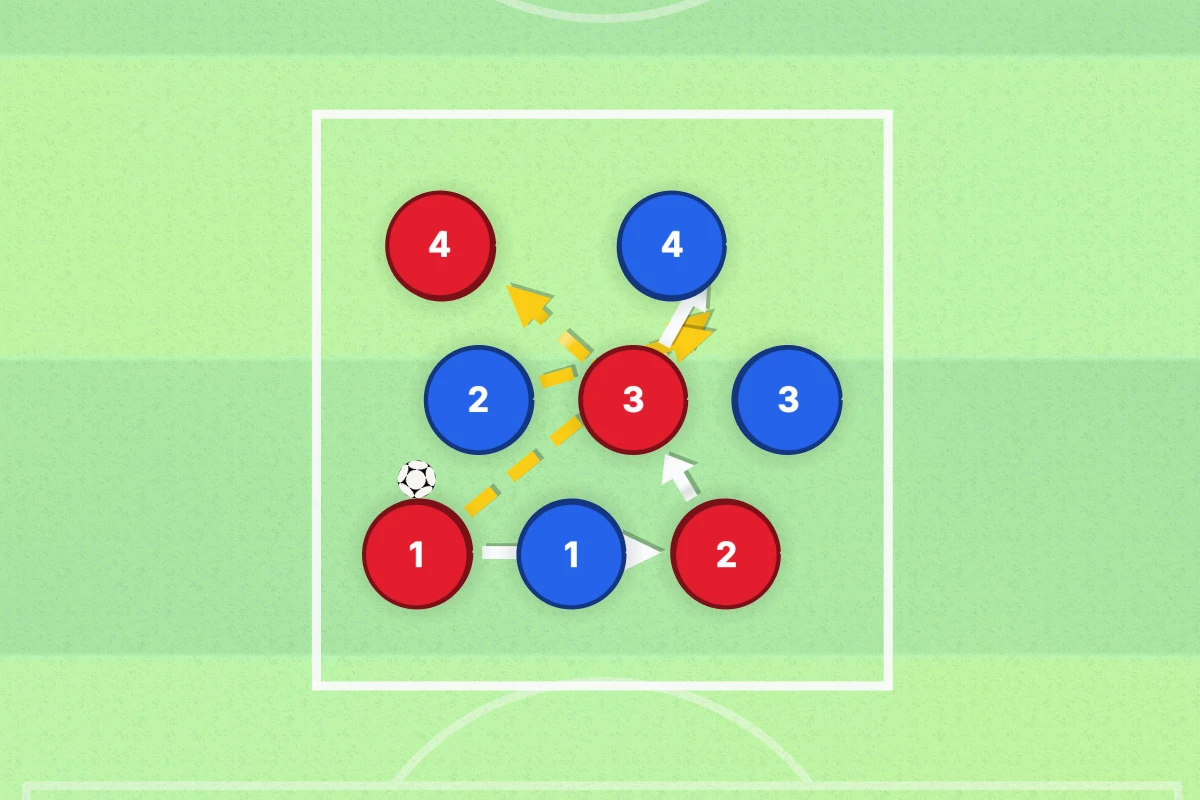
Two teams share the area, each passing among themselves and moving after every pass.
Receiving on the Half-Turn Drill
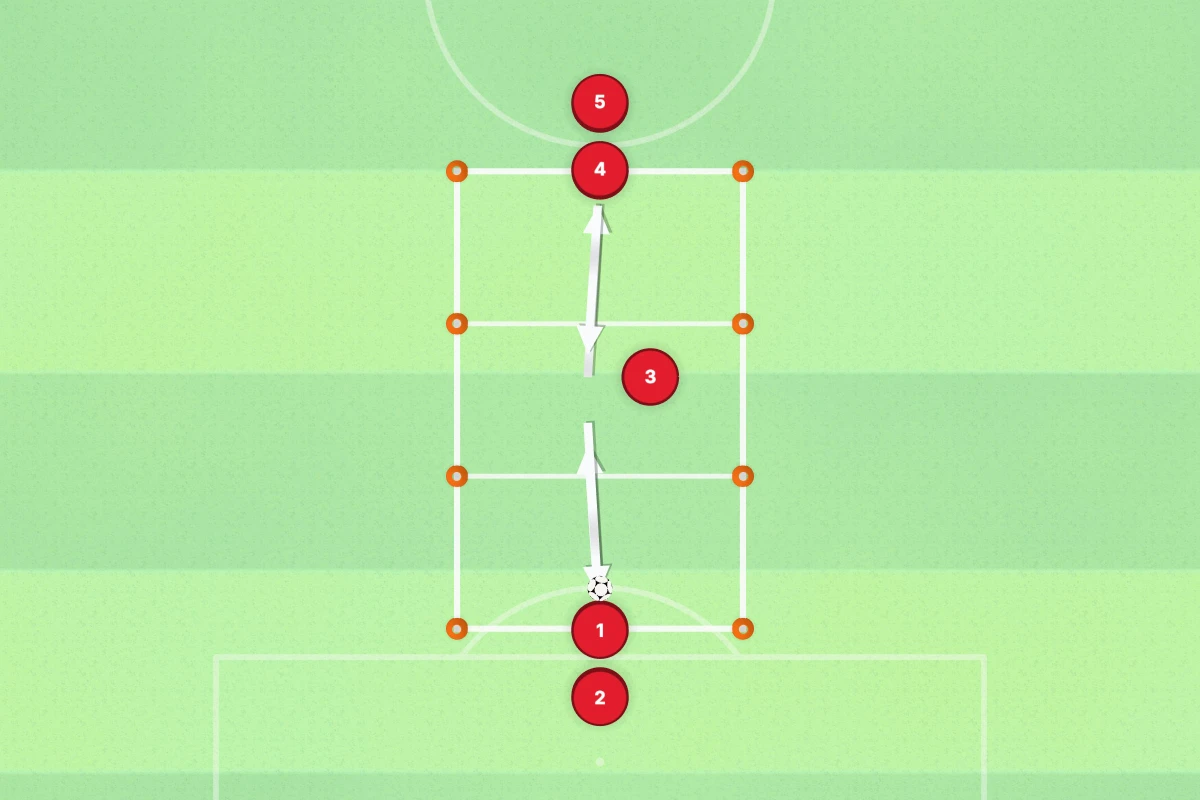
A middle player receives side-on and plays forward in one movement.
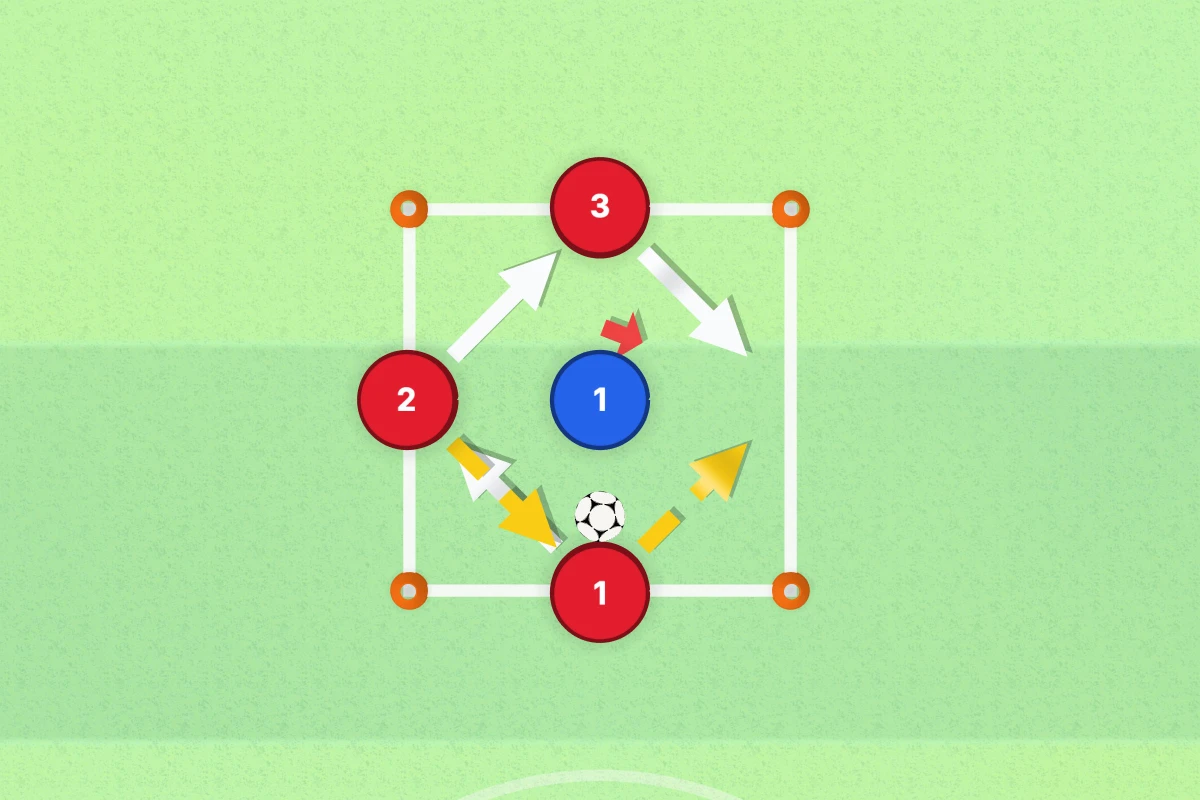
3v1 Rondo
Three keep the ball from one in a small box.
More in passing drills, warm-ups drills, or browse the full drill library.