Why Voronoi Matters
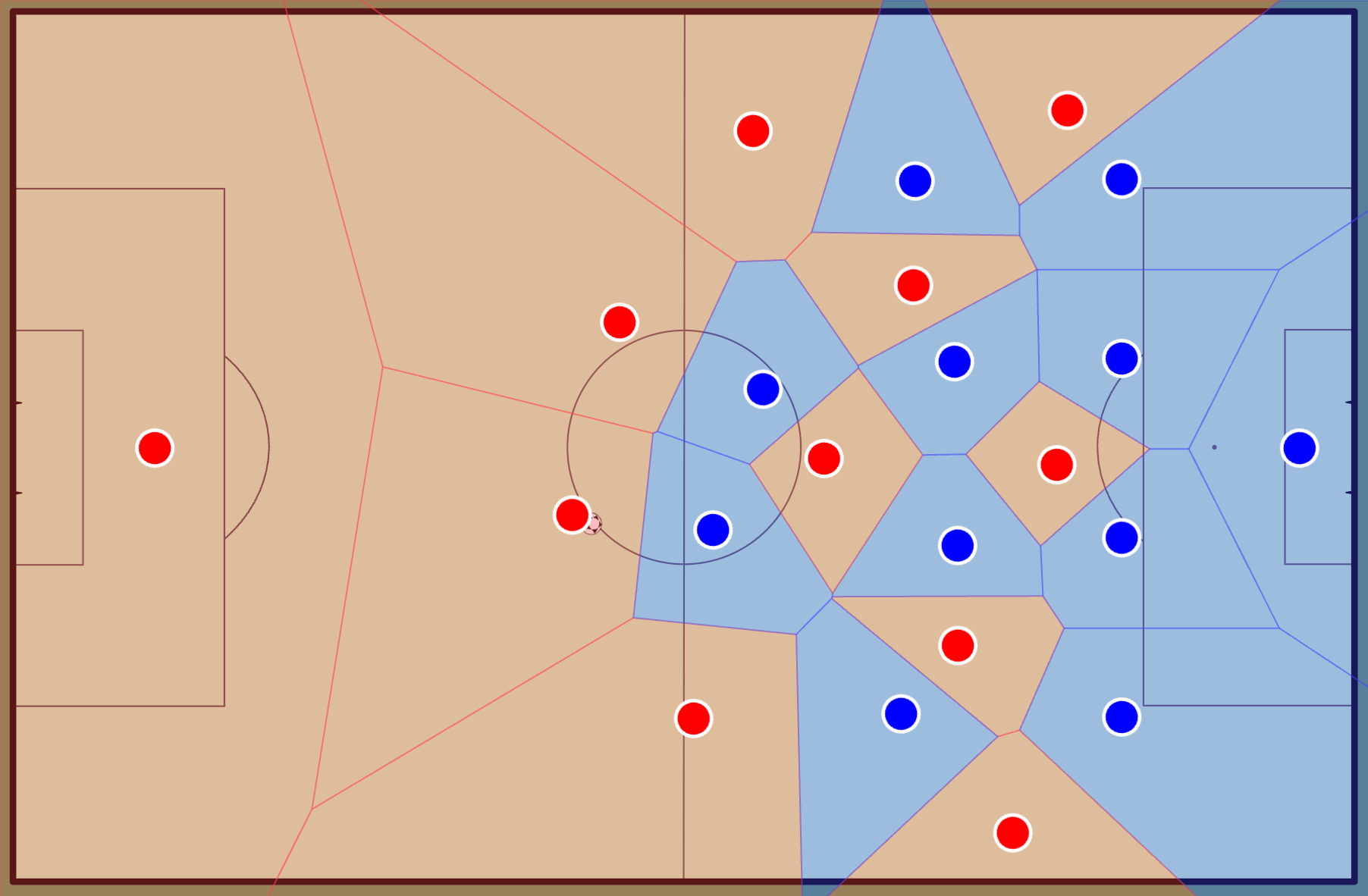
A football Voronoi diagram splits the pitch into zones based on nearest-player distance. Instead of only seeing where players stand, you can see who controls each area of the field at a glance.
This makes it easier to explain tactical ideas in meetings: compactness, rest defence shape, pressing access, overloads, and where the weak side is exposed.
Because the overlay updates from player positions, it becomes a practical coaching aid for both pre-match planning and post-match review.
FAQ: Football Voronoi Diagrams
What is a football Voronoi diagram?
It is a pitch map where each zone belongs to the nearest player. Coaches use it to assess space control, support distances, and defensive coverage.
How accurate is Voronoi for tactical analysis?
Voronoi is a strong first-pass spatial model. It does not capture body orientation or speed directly, but it is excellent for explaining spacing structure quickly.
Can I export and share Voronoi diagrams?
Yes. In DrawTactics you can export PNGs for presentations and social posts, or save board JSON to reopen and edit later.
Who uses this feature?
Coaches, analysts, scouts, and content creators who want a clear way to communicate pitch-control concepts.