Switching Play Drill: Four-Goal Game
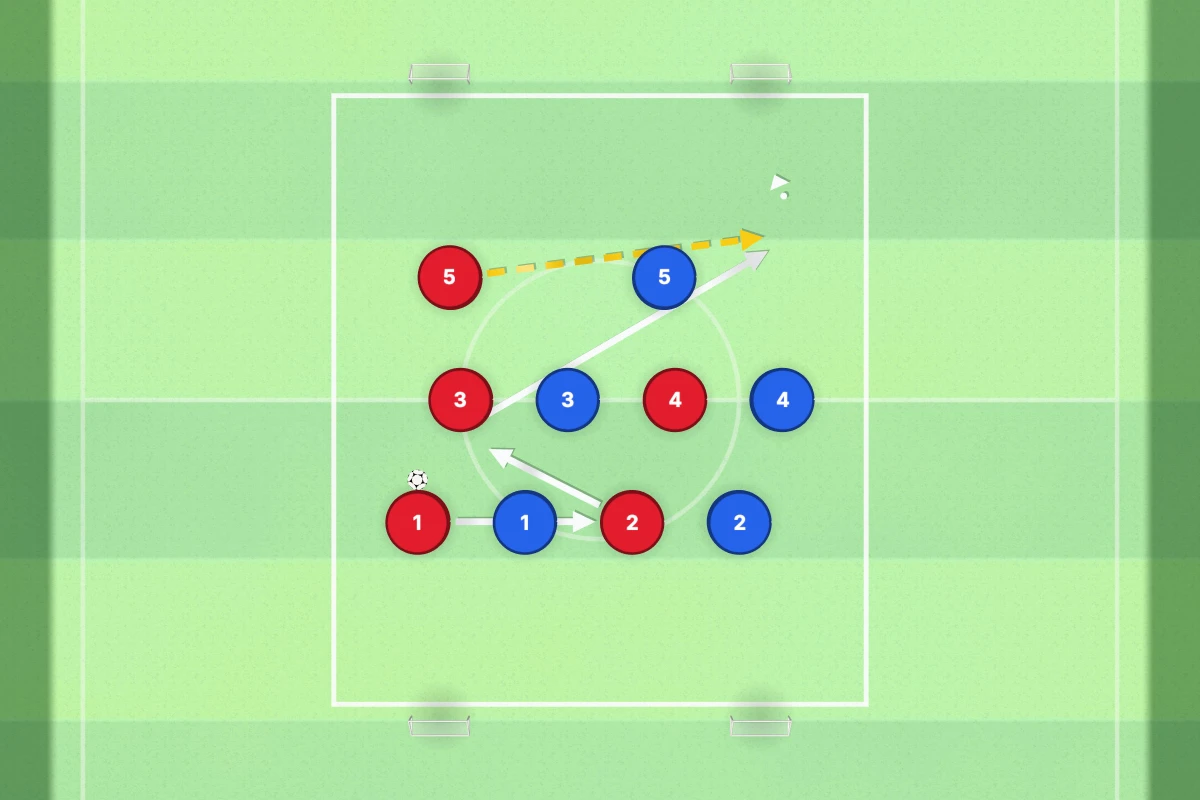
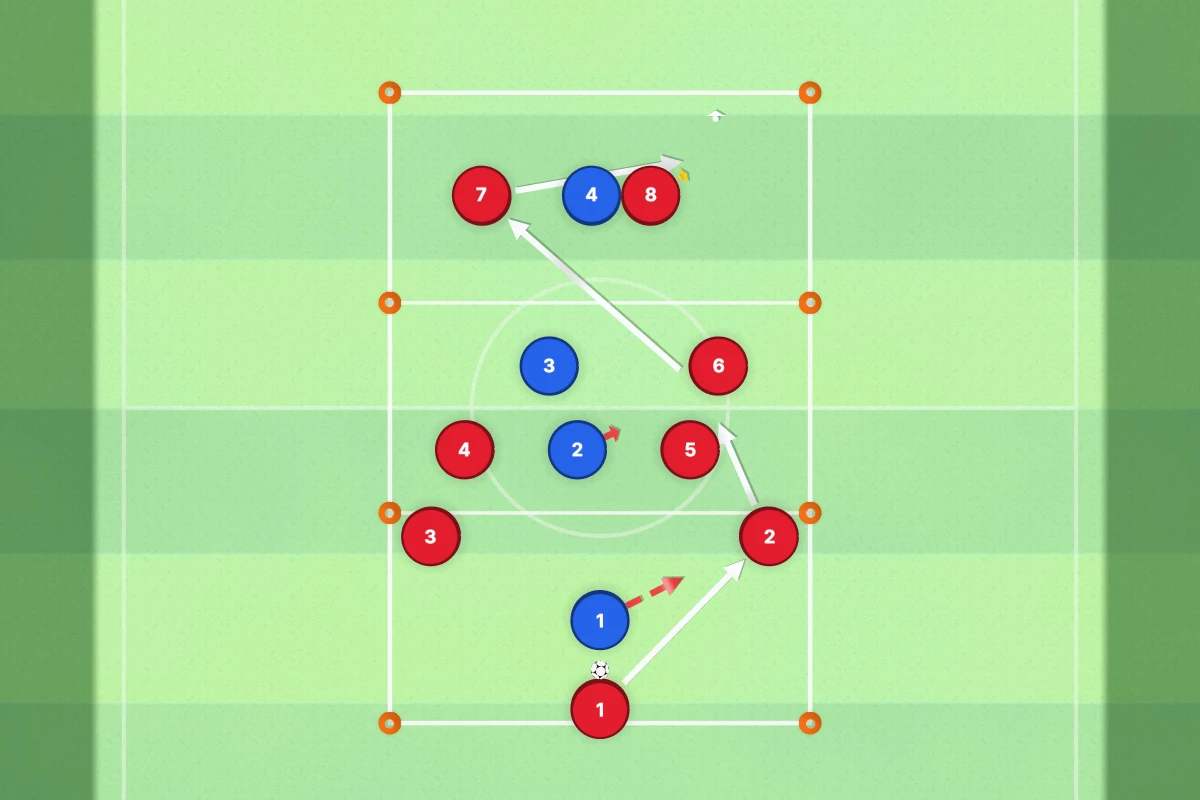
This switching play drill puts two mini goals on each end line, so there is always a goal the defense isn't guarding. The team on the ball draws the opponents toward one goal, then moves it quickly to the far side and attacks the other.
- AgesU10 to adult
- Players6 to 14
- Space40 × 35 m
- Time20 min
- IntensityHigh
It teaches players to see the whole width of the field, to keep a teammate wide on the far side and to switch in one or two passes rather than five. Defenders learn to shift across together. Run it as the main game in a session about width or attacking the weak side.
Setup
Mark a 40 × 35 m area and set two mini goals on each end line, about a quarter of the width in from each corner. Play 5 Reds against 5 Blues, 10 players in total. Each team attacks the two goals at one end and can score in either. Restart from the end line after a goal or a ball out of play.
- Equipment4 mini goals, Cones to mark the area, Bibs, Supply of balls
How it works
- A Red passes short to a teammate on one side, a Blue presses, and the rest of the Blues shift across toward the ball.
- The Red moves it on to a teammate as the far-side Red runs wide and high on the opposite flank.
- The Red on the ball switches play with a lofted pass to that far-side runner.
- The far-side Red carries the ball toward the unguarded mini goal.
- They finish into the far mini goal before the Blues can shift back.
Coaching points
- Draw the defense to one side, then switch to the other
- The far-side player stays wide and high, ready for the switch
- Switch quickly: one or two passes, not five
- Defenders shift across together and keep the distances between them short
- Look up before you receive so you know where the free goal is
Make it harder
- A goal after a switch counts double
- Two-touch limit for everyone
- Only the goal on the far side from the last pass counts
Make it easier
- Make the area wider
- Add a neutral who joins whichever team is attacking
- Move the two goals further apart
Adapting it by age
U8–U10
Play 4v4 in a 30 × 25 m area with the goals close to the corners. Let players dribble across instead of passing if they prefer, and praise any time they spot the free goal.
U12–U14
Use 5v5 at 40 × 35 m. Introduce the double-points switch rule and show what a lofted pass across the field looks like.
U15 to adult
Play 6v6 or 7v7 at 50 × 40 m on two touches. The defending team should keep its distances tight so a slow switch never gets through.
Common mistakes
Everyone follows the ball, so there is nobody on the far side to switch to. Freeze play and ask who is guarding the far goal and who is free to receive there.
The switch takes too many passes and the defense has time to recover. Reward a goal scored within three passes of the switch.
Lofted switches are overhit or skied. Ask for a driven ball across the ground or at waist height, struck with the laces through the middle of the ball.
Defenders only guard the nearest goal. Point out the two goals behind them and coach the far-side defender to tuck in but stay ready to slide across.
FAQ
Why use four goals in a switching play drill?
With two goals to defend at each end, the defense can't cover both. That makes switching the ball to the far goal the clearest way to score.
What age can play a four-goal game?
From around U8 with smaller numbers and space. Younger players often dribble across rather than pass, which still trains the idea of attacking the free side.
Make this drill your own
Open the switching play drill: four-goal game in DrawTactics to change the numbers and the size of the area, move the players, and export your own animation or diagram for your team. Or add it to a free session plan and print it.
Animate it in DrawTacticsRelated drills
Wide Channels Game: Soccer Wide Play Drill
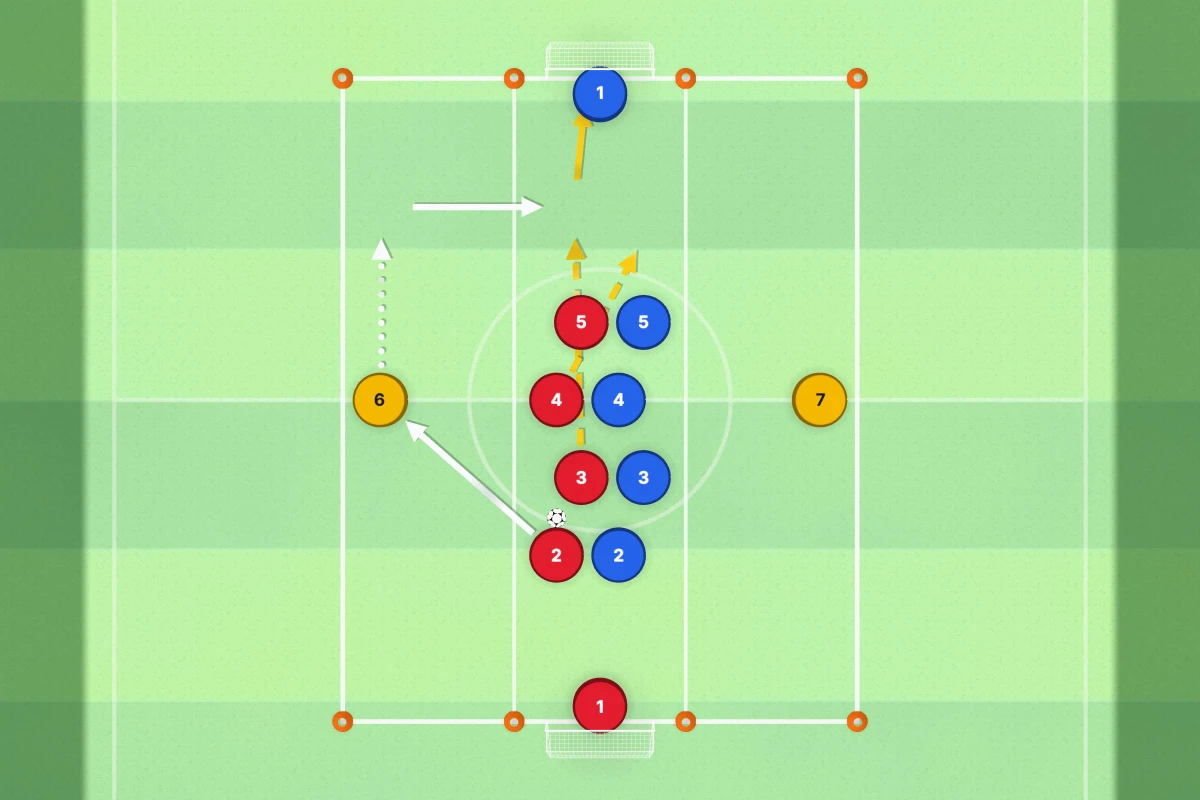
Wide neutrals in their own channels help the team in possession get round the defence.
Possession Drill with Neutrals (4v4+3)
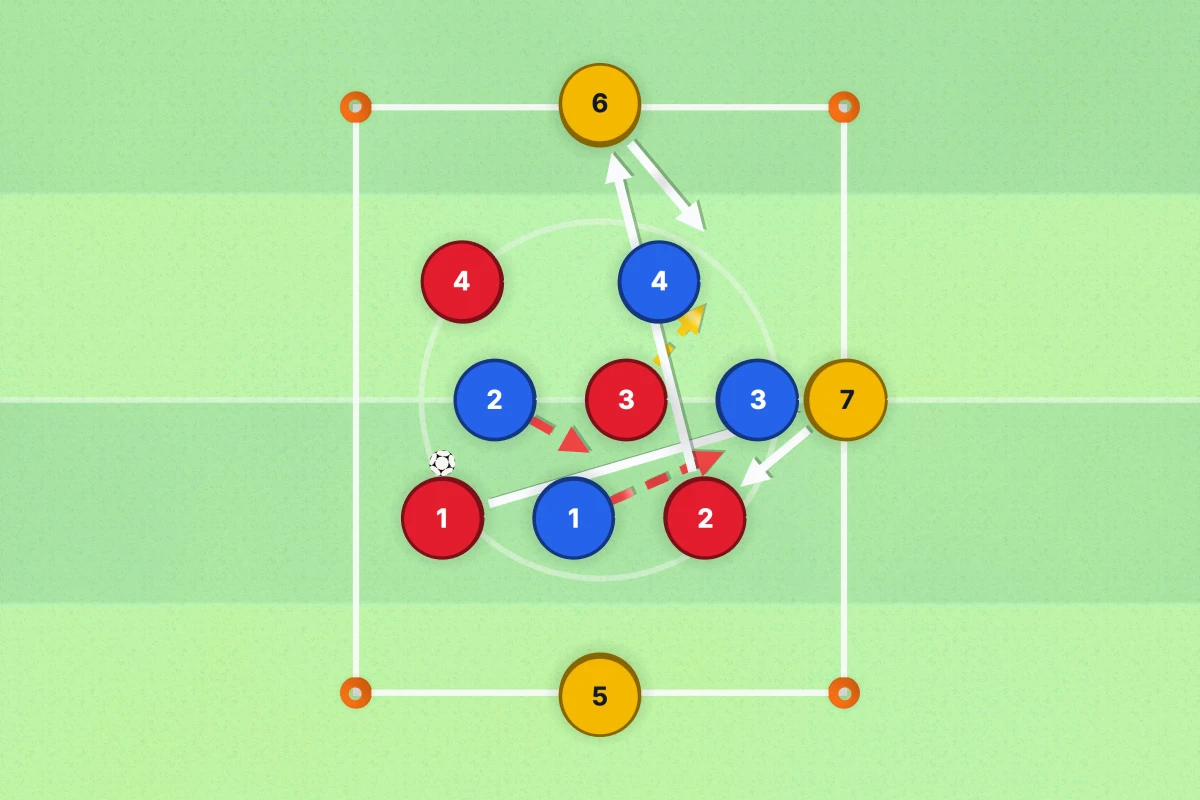
Keep the ball with the help of neutrals who play for whoever has it.
Small Sided Games: 4v4 to Mini Goals
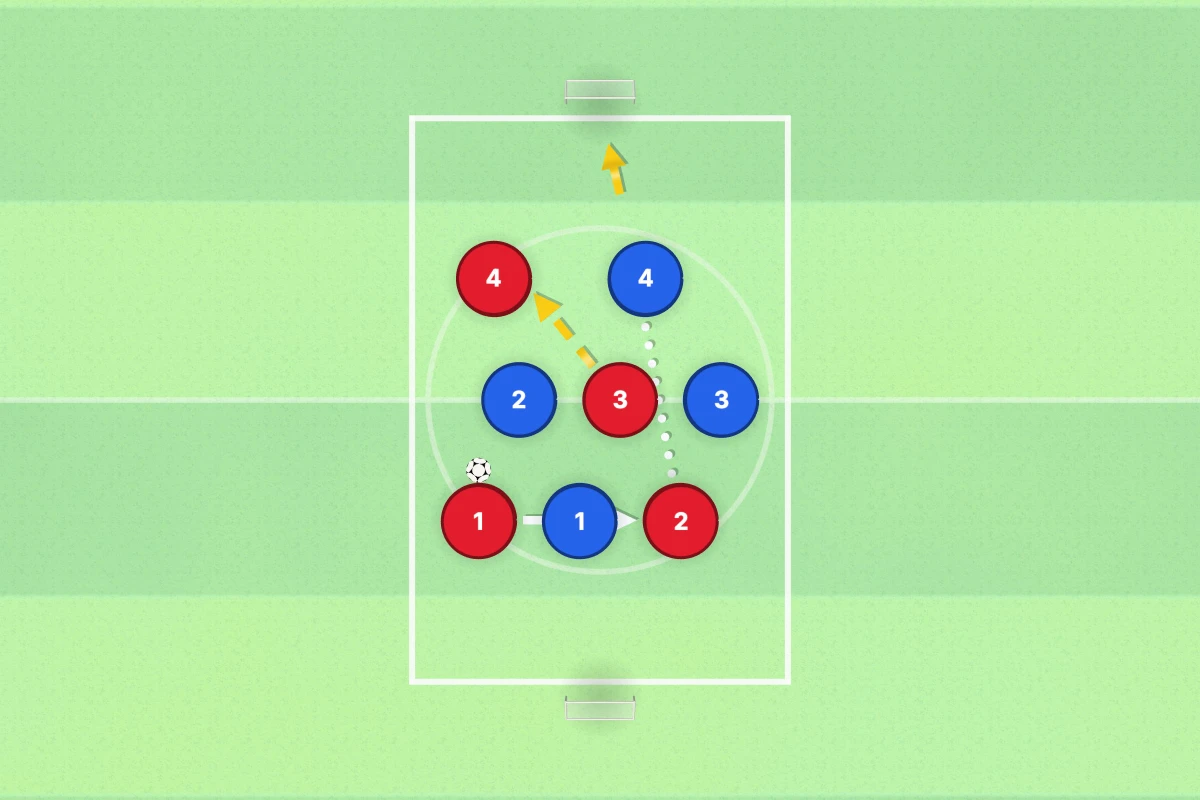
A small-sided game to a mini goal at each end.
Playing Through the Thirds Soccer Drill
Build from one end to the other, zone by zone, with an overload in each third.
More in possession drills, small-sided games drills, or browse the full drill library.