Playing Out From the Back Drill
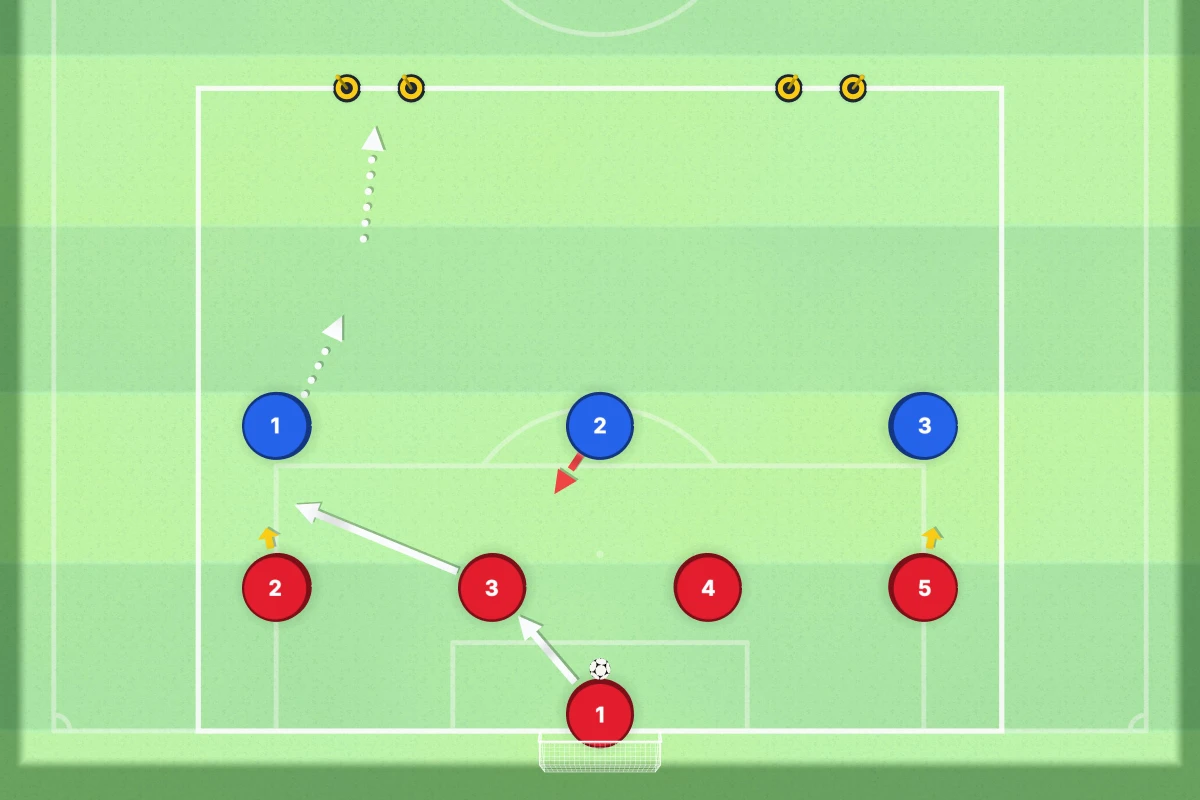
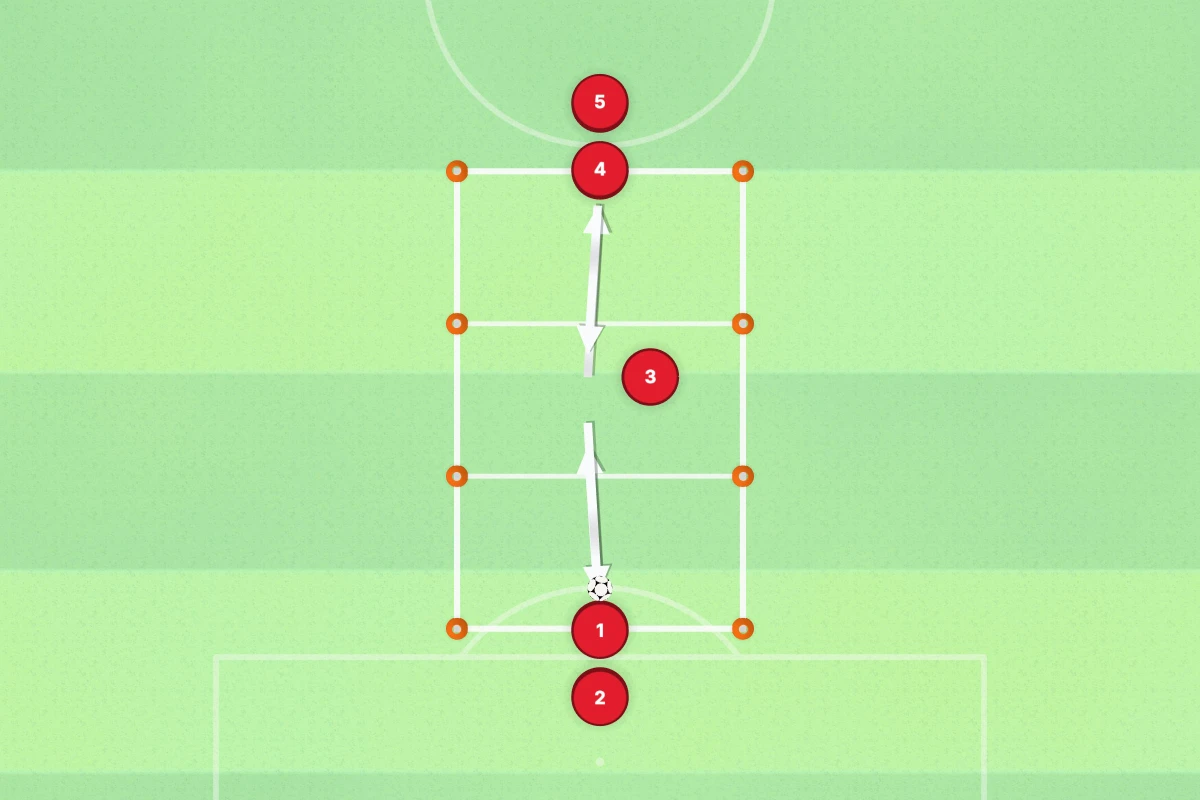
This playing out from the back drill puts the keeper and back four in their own half against three pressers. The builders score by dribbling through a gate at the top of the area; the pressers score if they win the ball and finish in the big goal.
- AgesU10 to adult
- Players6 to 10
- Space40 × 50 m
- Time20 min
- IntensityMedium
It develops the build-up shape, receiving on the half-turn and choosing the free player under pressure. Every turnover is punished with a shot, so players learn when to play through the press and when to go back to the keeper.
Setup
Mark an area 40 m long and 50 m wide running out from your own goal line, with a full-size goal and keeper at the bottom. Four defenders line up about 9 m out from goal, and three pressers start just below the middle of the area. Two 4 m gates made from poles sit on the top line, one on each side. The builders score by dribbling through either gate; the pressers score in the big goal.
- Equipment1 full-size goal, 4 poles for two gates, A supply of balls, Bibs in two colors
How it works
- The full-backs push high and wide, the keeper passes to a center-back, and the middle presser closes them down.
- The center-back plays out to a full-back and the nearest wide presser goes to them.
- The full-back carries the ball up the line, away from the press.
- The full-back dribbles through the gate on their side to score.
Coaching points
- Keeper and center-backs make a triangle; full-backs go high and wide
- Receive on your back foot, already half-turned to face forward
- Play away from the press to whoever is free
- Be patient: go back through the keeper if it's closed
- Move the ball quickly: every extra touch lets a presser get closer
Make it harder
- Add a fourth presser
- Builders score only after passing through a midfielder
- Restart every rep with a goal kick so the pressers can set up
Make it easier
- Pressers start further away
- Use two pressers
Adapting it by age
U8–U10
Build with a keeper and three defenders against two pressers in a 30 × 40 m area. Pressers start on the halfway line until the keeper's first pass.
U12–U14
Use the default keeper plus four against three. Before the press can start, the keeper must play the first pass, and a builder gets a bonus for switching sides through the keeper.
U15 to adult
Play keeper plus four against four in the full 40 × 50 m and add a holding midfielder who must touch the ball before the gate counts.
Common mistakes
Center-backs stand too close together and one presser marks both. Ask them to split to the edges of the penalty area so the keeper has two clear passing lanes.
Defenders receive facing their own goal. Coach an open body and a first touch with the back foot so they can see forward before the ball arrives.
Builders force passes through the middle when it's crowded. Praise a pass back to the keeper to switch play; a goal for the pressers costs more than a slow build-up.
Full-backs stay deep and narrow, so there's no outlet. Set a disc high and wide on each side as a starting position for the full-backs.
FAQ
At what age should a team start playing out from the back?
From the first years of 9v9 (around U10 to U11) it's worth practicing, provided coaches accept mistakes as part of learning.
What should a team do if the press is too strong?
Go long to a target or switch through the keeper. Playing out is a choice, not a rule, and this drill teaches players to read when it's on.
Make this drill your own
Open the playing out from the back drill in DrawTactics to change the numbers and the size of the area, move the players, and export your own animation or diagram for your team. Or add it to a free session plan and print it.
Animate it in DrawTacticsRelated drills
Pressing Trigger Drill
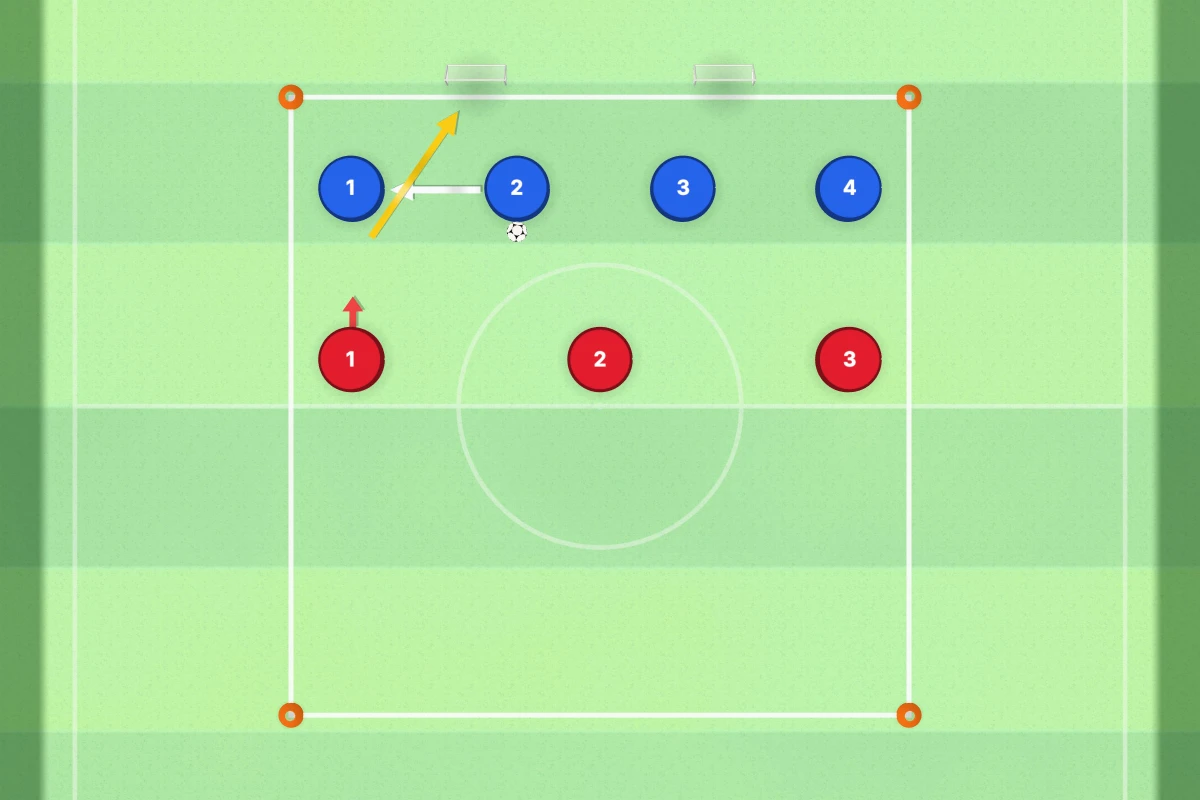
Three forwards wait for a pass to the full-back, then press together.
Possession Drill with Neutrals (4v4+3)
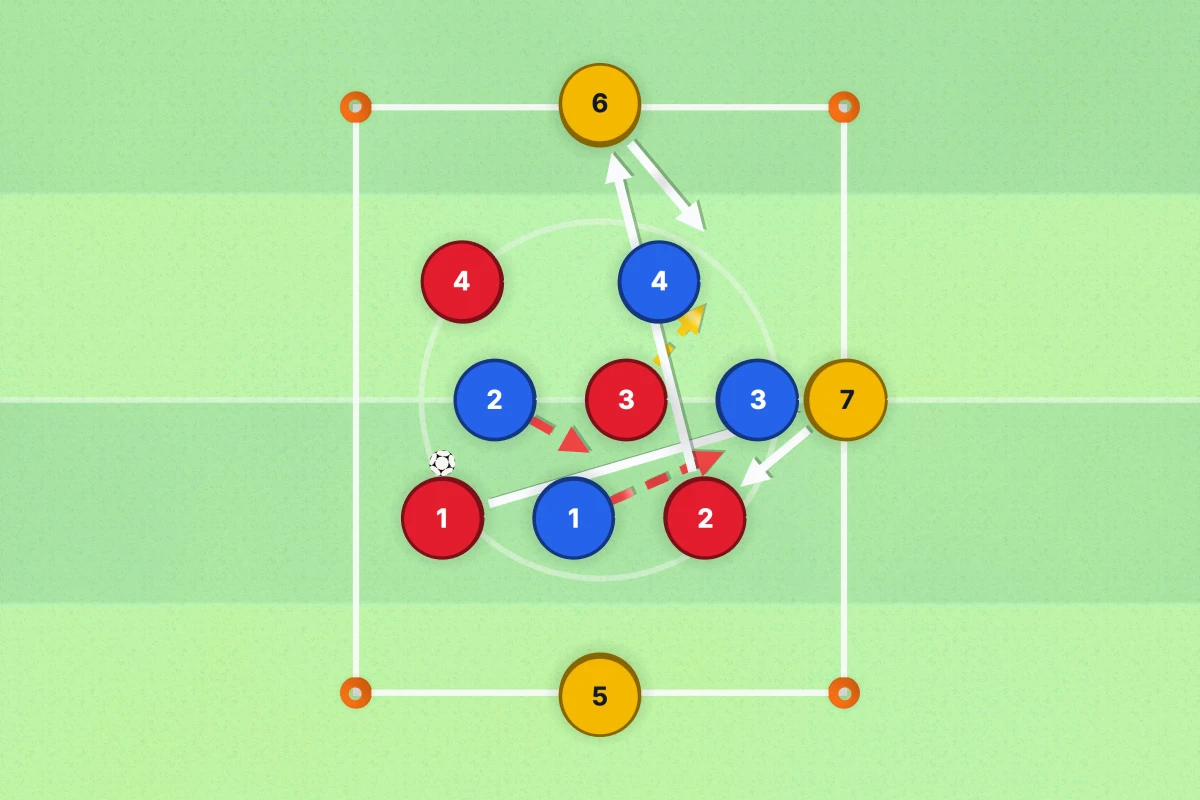
Keep the ball with the help of neutrals who play for whoever has it.
Playing Through the Thirds Soccer Drill
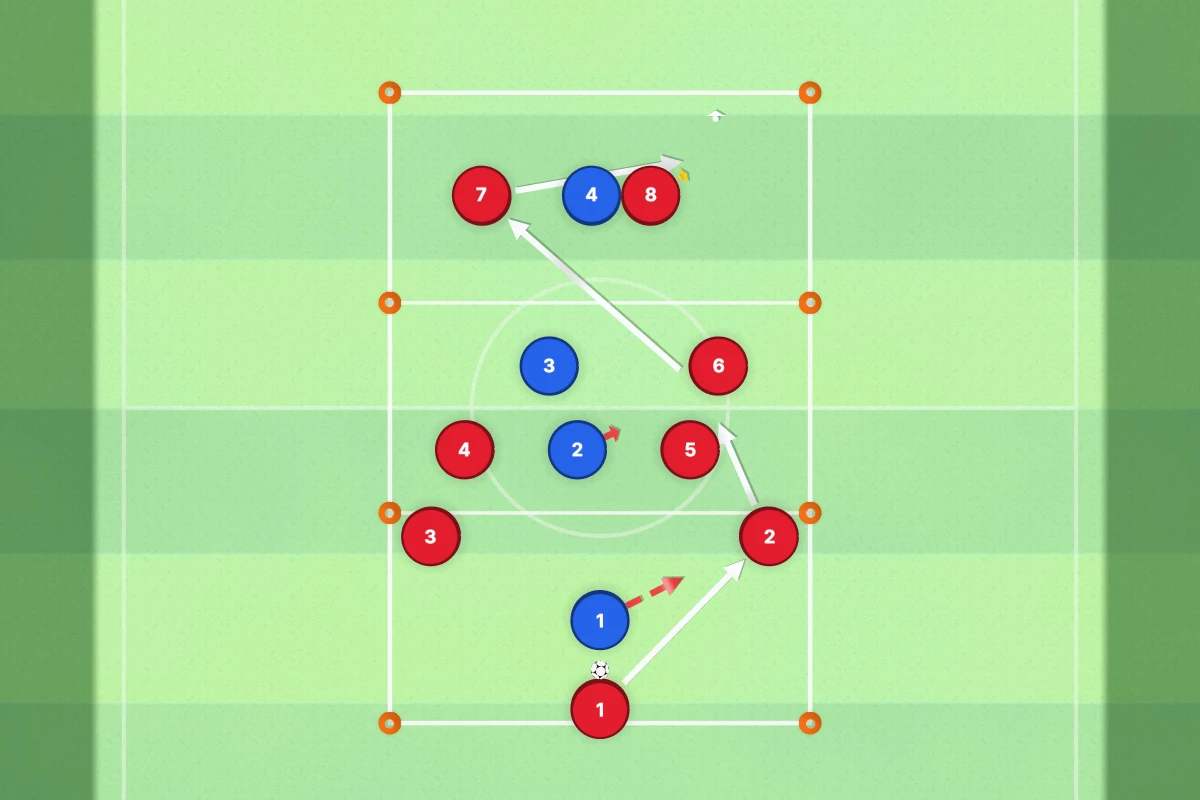
Build from one end to the other, zone by zone, with an overload in each third.
Receiving on the Half-Turn Drill
A middle player receives side-on and plays forward in one movement.
More in transition drills, or browse the full drill library.