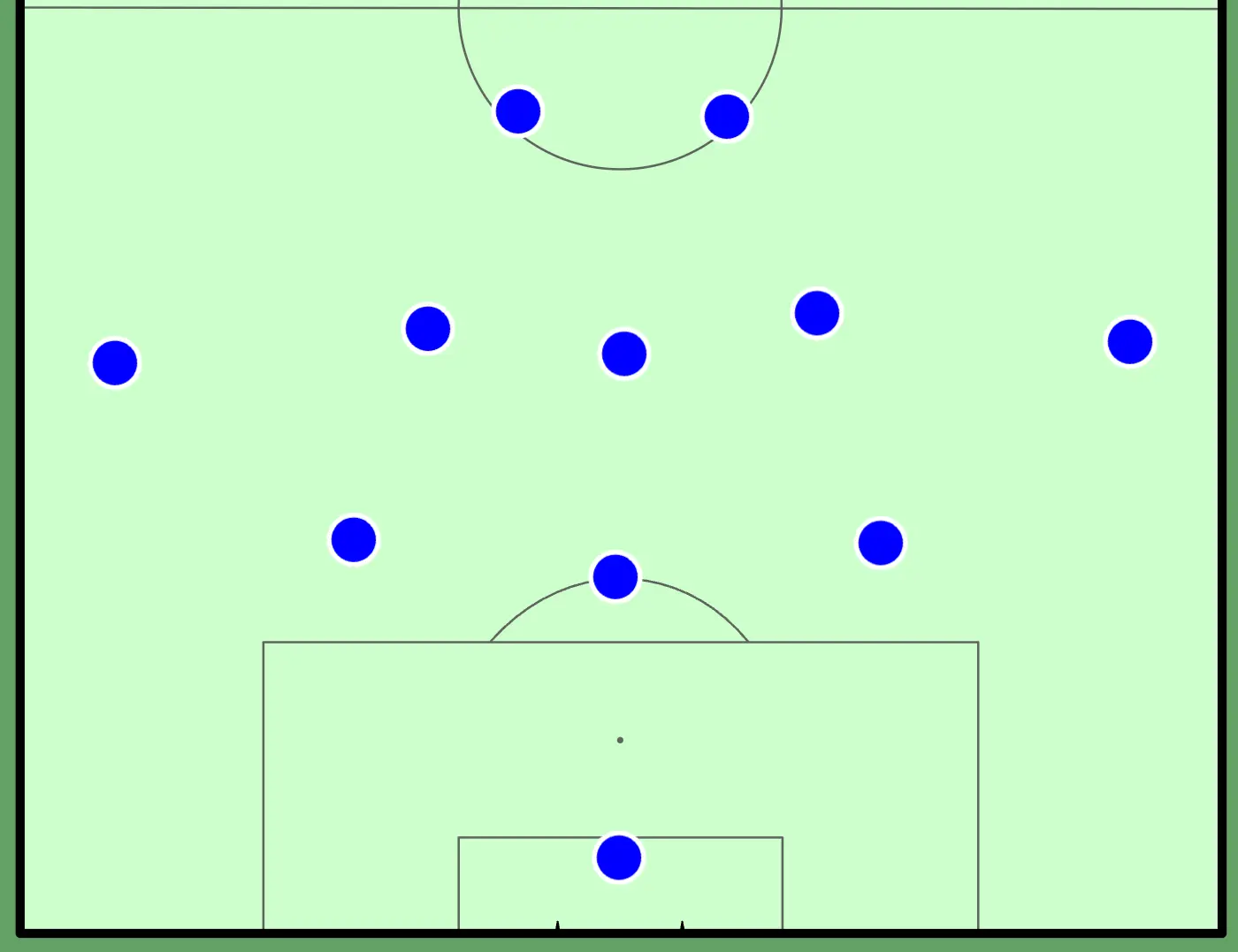
The 3-5-2 formation has evolved from a defensive experiment into one of football's most balanced tactical systems. First popularized by Carlos Bilardo's Argentina at the 1986 World Cup, this structure now drives the strategies of elite teams such as Inter Milan and Atalanta.
This guide breaks down the structural mechanics, player roles, tactical applications, and training priorities that make the 3-5-2 a high-value system for coaches working at different levels of the game.
In Short: Key Takeaways
- The 3-5-2 provides central control, defensive security, and two-forward pressure.
- Wing-backs are the tactical engine and the non-negotiable profile in this system.
- Modern variants rely on hybrid center-backs and fluid midfield rotations.
- The biggest risk is transition space behind advanced wing-backs.
Table of Contents
The Origins of the 3-5-2 Formation
Carlos Bilardo and the 1986 World Cup
The modern 3-5-2 emerged when Carlos Bilardo recognized that classic wide wingers were increasingly becoming midfield workers. That tactical shift reduced the value of traditional full-back marking references and opened the door for a back three plus midfield overload.
Bilardo's experiment with three central defenders gave Argentina a stronger central platform and created more freedom for Diego Maradona to influence games between the lines. The system used a libero behind two stoppers and asked wing-backs to provide the width and running power. The 1986 World Cup win validated the model at the highest level.
Structural Anatomy of the 3-5-2
The Back Three
In modern implementations, the central center-back organizes line height and initiates first-phase build-up. The outside center-backs are hybrid defenders: they must defend wide spaces in 1v1 situations while also carrying the ball into midfield and half-spaces when progression lanes appear.
The Goalkeeper as an Outfield Option
With a high line and possession-heavy approach, the goalkeeper frequently becomes the extra build-up player. Against two or three opposition pressers, this creates numerical stability and safer access into midfield.
Wing-Backs as the Tactical Engine
Without top-level wing-back output, the 3-5-2 can collapse into a passive 5-3-2. In possession, wing-backs must provide width, depth, and crossing quality. Out of possession, they must recover quickly to form the back five and protect wide channels.
Midfield Structures
Three common models appear in high-level football:
- Flat 3-5-2: compact central trio for stability and control.
- 3-1-4-2: single pivot behind two advanced midfielders.
- 3-4-1-2: double pivot supporting a specialist number 10.
All variants aim to control the center and support two strikers with better spacing and second-ball presence.
Striker Partnership Dynamics
Two strikers pin opposition center-backs and reduce spare-man freedom in a back four. The pairing usually combines profiles: one reference player for hold-up and duels, one mobile attacker for channels and depth runs.
Modern Tactical Innovations
Overlapping Center-Backs
The overlapping center-back concept, widely associated with Chris Wilder's Sheffield United, turns outside center-backs into advanced wide runners. As the wing-back moves inside and attracts a marker, the center-back overlaps into crossing zones and creates overloads against the opposition full-back.
Inter Milan Under Simone Inzaghi
Inzaghi evolved the 3-5-2 into a more fluid rotational system. Inter's center-backs can progress aggressively, midfielders rotate into cover, and the team frequently shifts shape during build-up to bypass pressure. The result is positional flexibility without losing structural balance.
Tactical Matchups: 3-5-2 vs Other Systems
Against 4-4-2
- Defensive spare man: back three vs two strikers.
- Midfield overload: central 3v2 advantages.
- Wing-back pinning: restricts full-back progression.
The key risk is delayed wing-back recovery, which can allow wide 2v1 scenarios for opponents.
Against 4-3-3
The 3-5-2 can match central numbers and defend front-three attacks with a back five in defensive phases. However, elite wide forwards can stretch outside center-backs if wing-backs are disconnected. Coaches often solve this by pressing high or dropping into a compact low block rather than lingering in medium-block distances.
Build-Up Mechanisms and Press Resistance
Bounce Pass and Advance
A lower starting position for the back three can increase vertical space and create dilemmas for pressing midfielders. This often opens access to dropping strikers or advanced midfielders.
Up-Back-Through
The pattern is simple and effective: play into a forward, bounce to a supporting midfielder, then play through into the newly opened lane. In the 3-5-2, wing-back movement is often the trigger that creates this lane.
Goalkeeper Integration
Including the goalkeeper in circulation makes full high pressing harder for opponents without exposing other areas of the pitch.
Defensive Organization and Vulnerabilities
5-3-2 Low Block
In deep phases, the shape condenses into a 5-3-2. Compact distances, central lane protection, and synchronized horizontal shifts are essential. This structure is effective at denying central progression and forcing low-value wide actions.
High Pressing Triggers
A common pressing trigger is the ball into the opposition full-back. The near wing-back jumps aggressively while midfield and back-three units shift to protect interior and depth spaces.
Main Risks
- Space behind wing-backs in transition moments.
- Wide forwards isolating outside center-backs in open space.
- Poor rest-defense shape when both wing-backs advance simultaneously.
Personnel Requirements
Center-Backs
- Central CB: line leadership, communication, first pass quality.
- Outside CBs: duel quality, covering speed, progression with the ball.
Wing-Backs
- High aerobic capacity and repeated sprint output.
- Crossing and final-third delivery quality.
- Strong defensive timing in wide 1v1s.
Midfielders and Forwards
- 6: screening and tempo control.
- 8s: box-to-box support and late-area arrivals.
- 10 (if used): line-breaking creativity.
- Forward pair: complementary hold-up and depth-running profiles.
The Socio-Economic Utility of the 3-5-2
For clubs without elite transfer budgets, the 3-5-2 can maximize collective output through role clarity, physical commitment, and compact support structures. Atalanta's model is a clear example of system advantage reducing dependency on individual superstar profiles.
For elite clubs, the same base can become highly fluid and unpredictable through rotations and asymmetries, creating overloads against conventional back-four systems.
Training the 3-5-2
Core Drill Themes
- Wing-back conditioning: repeated sprint and recovery patterns.
- Back-three coordination: unit shifting and cover-shadow cues.
- Central overload games: 3v2 and 4v3 midfield scenarios.
- Pressing trigger drills: striker press with wing-back jump timing.
Adapting to Squad Profile
If wing-backs are less explosive, reduce exposure with a more compact 5-3-2 base. If outside center-backs are less comfortable defending width, keep wing-backs deeper and adjust pressing aggression. If you have a high-level creator, consider a 3-4-1-2 to amplify their impact between lines.
Visualising the 3-5-2 with DrawTactics
Complex rotations and role changes are easier to teach with visual tools. Coaches need to show not only static starting positions, but phase changes and decision triggers.
DrawTactics provides a digital football tactics board for building 3-5-2 setups, mapping movement sequences, and sharing tactical ideas with players and staff.
Just need to share your 3-5-2 starting XI? Make a team sheet in seconds with the free football lineup builder.
Build Your Own 3-5-2 Setup
Create your lineup, animate wing-back movements, and prepare clear tactical visuals for your team.
Start with DrawTacticsConclusion
The 3-5-2 has moved from historical innovation to modern tactical mainstay. It offers central control, structural flexibility, and clear role relationships when coached with discipline.
Success depends on execution quality, especially in wing-back roles and transition management. For coaches with the right player profiles and training structure, the 3-5-2 remains one of the most effective systems in contemporary football.
FAQ
What is the best 3-5-2 variant for youth teams?
A compact flat 3-5-2 or conservative 5-3-2 base is often the safest starting point before adding advanced rotations.
How do you protect against counters in 3-5-2?
Use clear rest-defense rules: one wing-back can advance aggressively while the far side remains more conservative, with midfield cover staggered behind the ball.
Can 3-5-2 work without elite wing-backs?
It can, but with reduced attacking upside. Coaches should adapt with lower wing-back starting positions and stronger central compactness.