Soccer Formation Builder for Session Plans and Match Prep
Create clear tactical formations in minutes, explain responsibilities by role, and export visuals that players can absorb instantly.
Start Building FormationsDesign Tactical Shapes with Coaching Precision
Flexible Setup Formats
Build 11v11 match models, 7v7 development structures, and 5v5 small-sided practice shapes.
Role and Space Clarity
Map where players start, where they rotate, and how the team occupies key spaces in each phase.
Movement and Triggers
Draw progressive passing lanes, support angles, press cues, recovery runs, and transition patterns.
Fast Visual Exports
Download polished tactical boards for team talks, coach education, social content, and planning decks.
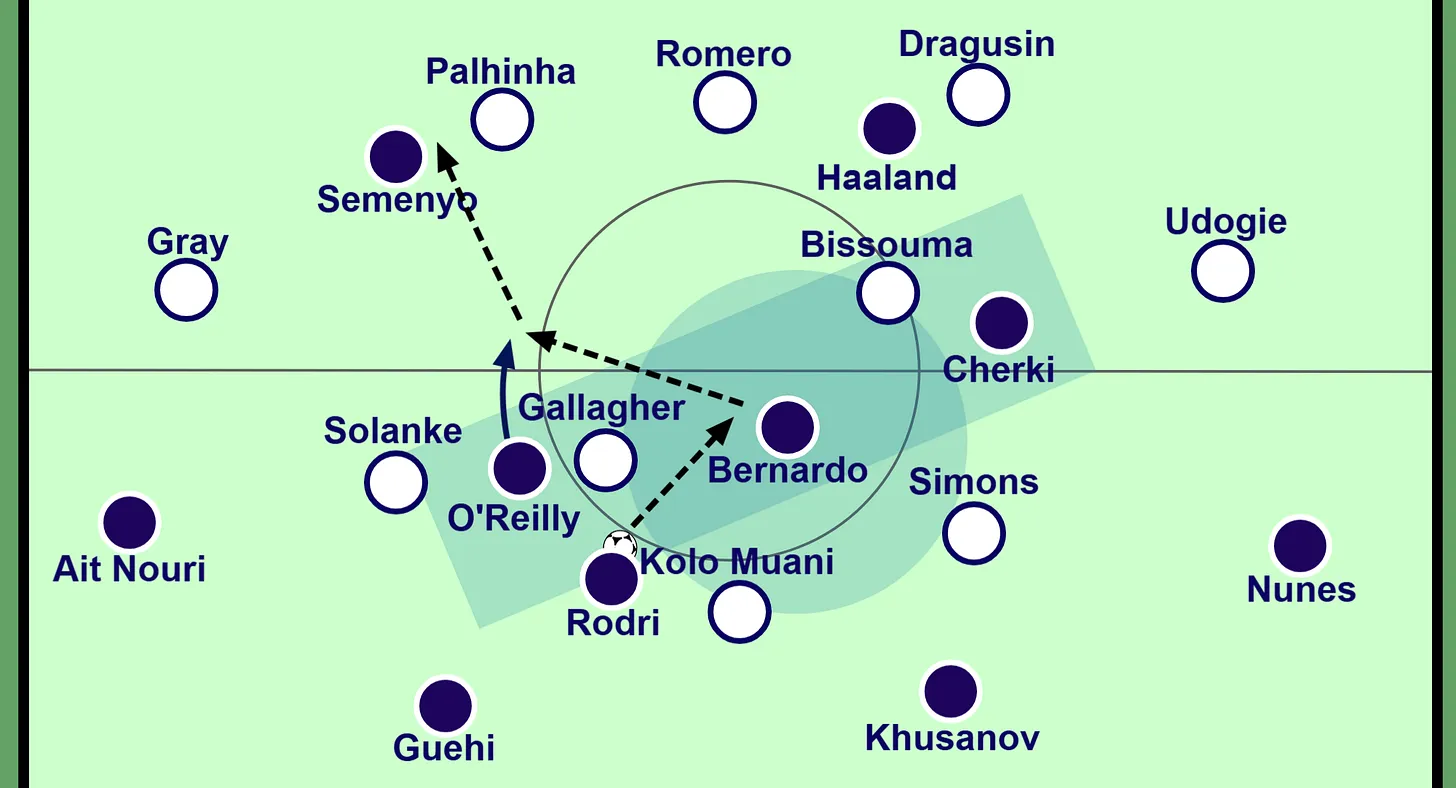
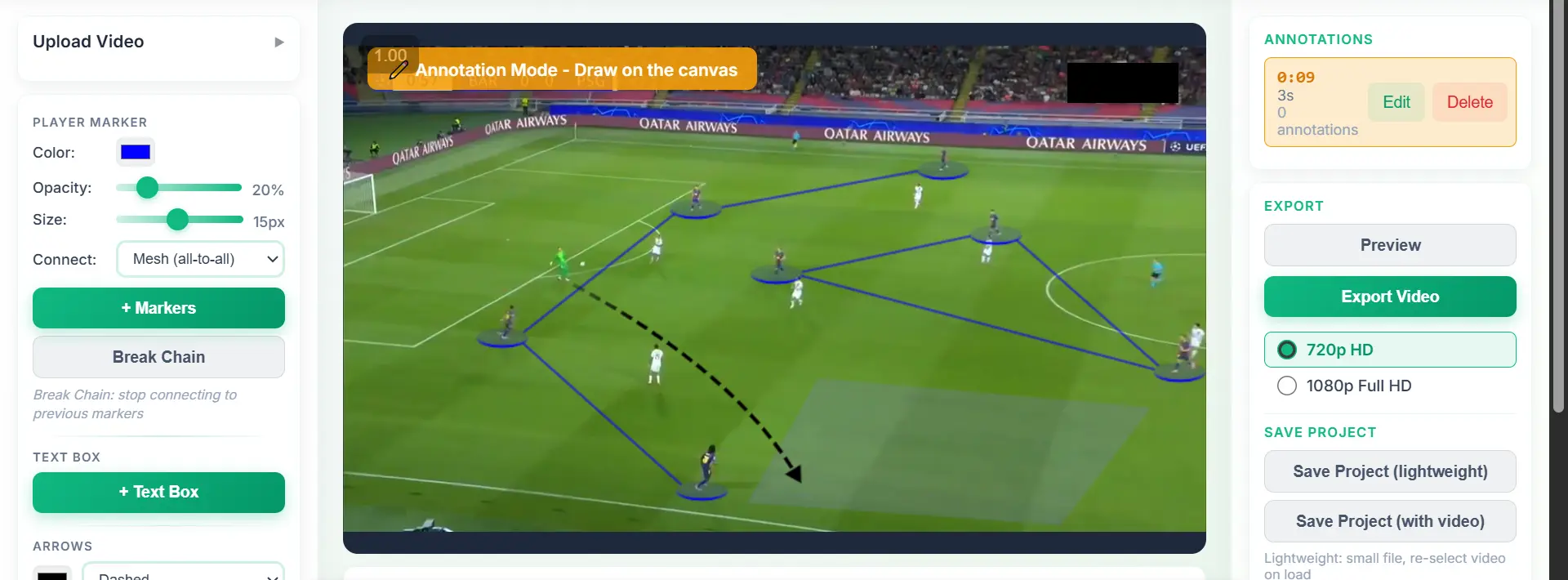
Formation Builder Preview
Landscape tactical visuals make it easy to present shape, distances, and coordinated movement in meetings and on mobile.
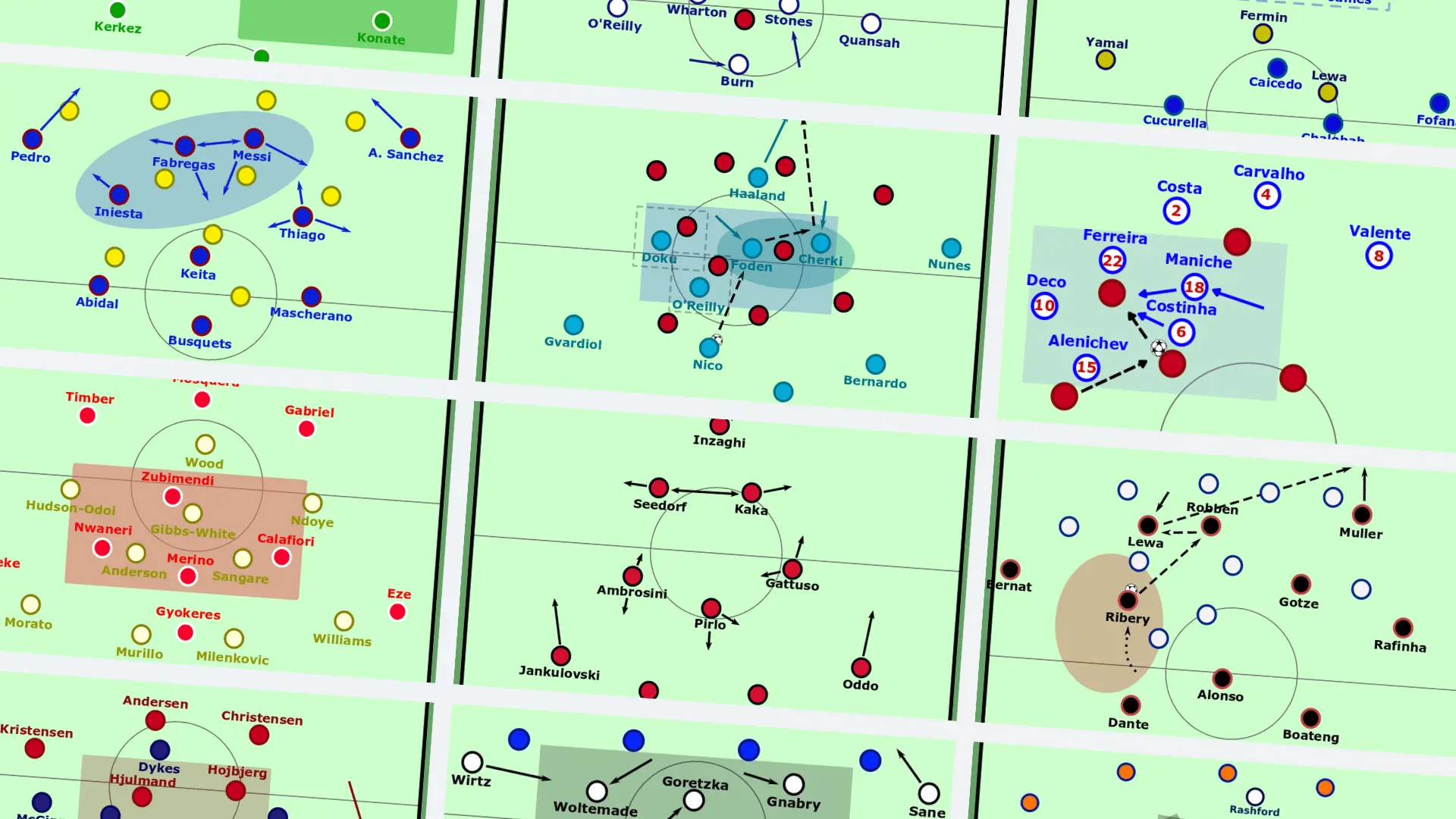
Plan, Explain, and Present
Move from static shape design into full tactical communication with visuals that support pre-match planning, halftime adjustments, and post-match learning.
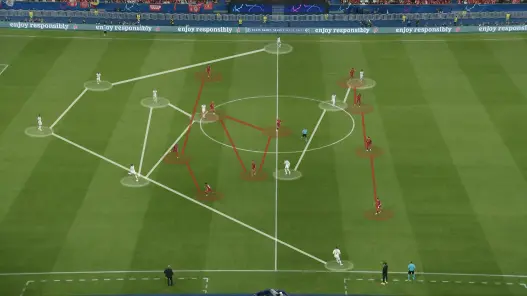
Common Coaching Scenarios
- Pre-match setup: compare two formation options before final lineup decisions.
- Training design: create phase-of-play visuals for build-up, pressing, and final-third patterns.
- Post-match review: recreate moments quickly, then pair with clips from the video analysis tool.
- Player learning: send simplified visuals to units so responsibilities are clear before sessions.
These scenarios work best when each board has one main objective. Instead of adding every possible detail, focus each visual on the single behavior you want players to execute under pressure.
How To Build Better Formation Boards
- Start with the game model, not the formation name. Define your intention first, then choose shape.
- Set player reference points clearly: who holds width, who supports inside, who balances rest defense.
- Create separate versions for in-possession and out-of-possession phases.
- Add one transition board so players understand immediate reactions after regain and loss.
This method makes your formation visuals more than diagrams. They become decision guides players can apply in real match speed.
Useful for Academy and First-Team Contexts
Academy coaches can use the same board structure across age groups to build shared tactical language. First-team coaches can accelerate preparation by updating one core structure for opponent-specific adjustments.
Because the visuals are easy to export and share, assistants, analysts, and players can all work from the same tactical references before training and on matchday.
Frequently Asked Questions
Can I build formats beyond 11v11?
Yes. You can model 7v7, 9v9, and small-sided structures for development and session design.
Do formation boards help in live coaching meetings?
Yes. They are effective for quick tactical alignment before training, halftime adjustments, and post-match debriefs.
Should I use one board per phase?
Usually yes. Separate phase boards keep player instructions clearer and easier to remember.
From Formation Board to Full Coaching Workflow
DrawTactics is more than a shape editor. Use the full tactics board for detailed diagrams, the lineup builder for quick team sheets, and screenshot/video tools for evidence-based feedback all in one platform.
When these tools are connected, you move from planning to explanation to review without losing context. That continuity is what makes tactical communication faster and more effective over a full season.